
Rarely seen ND artifact in new Smithsonian exhibition
Trending
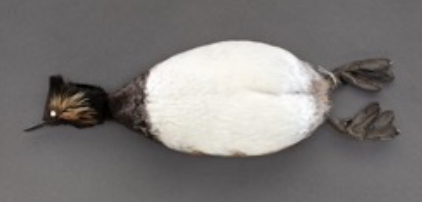
WASHINGTON - An eared grebe, a rarely seen North Dakota artifact, is among artifacts from all 50 states, the District of Columbia and five U.S. territories in the Smithsonian's National Museum of Natural History’s new exhibition, "From These Lands: Sharing Our Natural and Cultural Heritage."
The exhibition opened Thursday, June 18.
"From These Lands" has six objects from North Dakota, including the eared grebe.
Stretching across 5,000 square feet, the exhibition invites visitors to celebrate and reflect on the nation's rich natural and cultural heritage through more than 600 specimens and cultural objects - many rare and never-before-exhibited, according to National Museum of Natural History information.
The exhibition will remain on view through December 2029.
Drawing from the museum's unparalleled collection of more than 148 million objects, the exhibition highlights items that showcase the remarkable range of American nature, geology and cultural traditions. From ancient fossils and dazzling minerals to cherished cultural belongings and groundbreaking scientific discoveries, "From These Lands" illuminates the many connections between people, places and the natural world.
"This exhibition brings the entire country into one gallery--letting visitors encounter the extraordinary breadth of America's natural and cultural heritage," said Kirk Johnson, the Sant director of the National Museum of Natural History. "As the country marks its 250th anniversary, 'From These Lands' presents an opportunity to celebrate the diversity of our landscapes, the depth of our history and the connections that link people and the natural world across borders."
The objects on view will weave state and regional stories into recurring themes that show how natural history collections reveal unexpected connections, inspire wonder, spark conversation and generate knowledge.
The museum's collections are constantly growing as scientists collect specimens to answer new research questions. The eared grebe (Podiceps nigricollis), collected in North Dakota in 2012, was partof a study revisiting the same region surveyed during the 1872-1873 U.S. Boundary Survey. By comparing modern and historical specimens, researchers were able to track environmental and evolutionary changes in bird populations over more than a century. This specimen also helped scientists investigate salt-gland development in water birds, illustrating how each addition to the collection contributes new insights into the natural world.
"Natural history is everything. It is the people around us, the food we eat and the ground we walk on," said Torben Rick, co-curator of the exhibition and curator of North American archaeology at the museum. "At its core, this exhibition is about connection. Visitors come to the National Museum of Natural History and get a chance to see themselves reflected in its stories."
To complement the new exhibition, additional offerings will include a companion book, “From These Lands: Sharing Our Natural and Cultural Heritage.” Available in seven languages, a print-on-demand, DIY exhibition toolkit will explore North American biomes and highlight the diversity of species, colors and shapes in the museum's collections. An online version of the exhibition will also be available on the museum's website.
"From These Lands" and related programming are part of "Smithsonian's Our Shared Future: 250," a Smithsonian-wide initiative supported by private philanthropy and created to commemorate the nation's 250th anniversary and advance the Smithsonian vision for the next 250 years.
The National Museum of Natural History is one of the most visited natural history museums in the world. Opened in 1910, the museum is dedicated to maintaining and preserving the world's most extensive collection of natural history specimens and human artifacts.