
Exercise prepares airmen for expeditionary operations
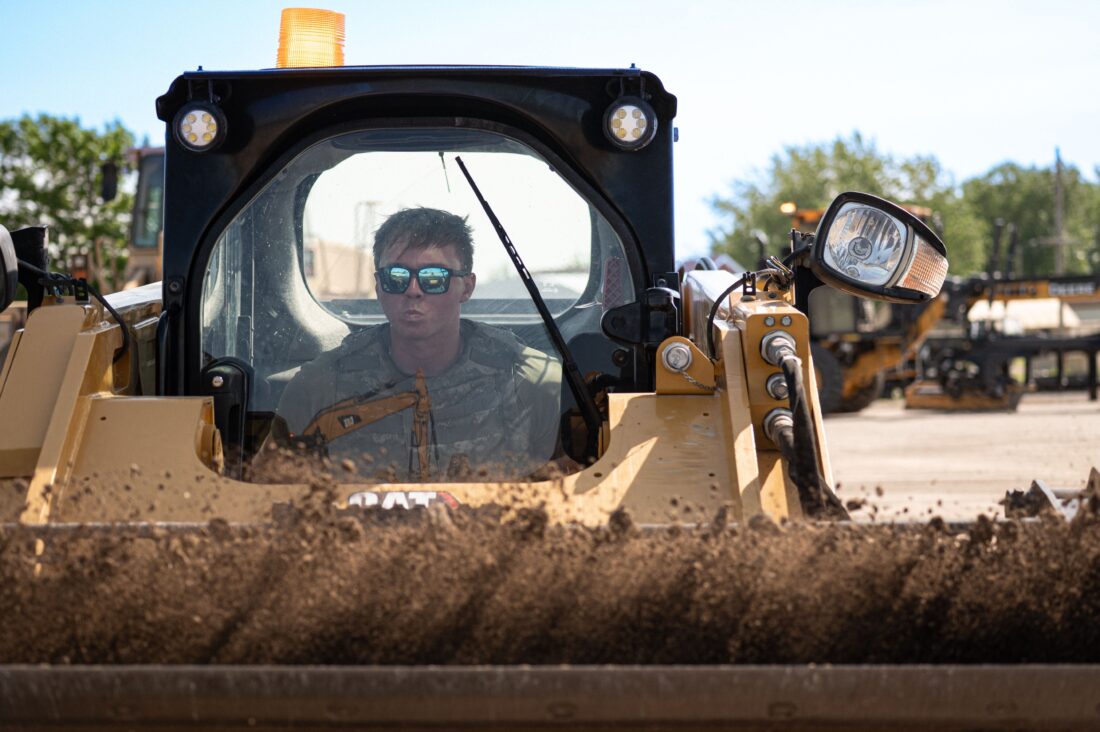
Submitted Photo Senior Airman Mathew Plummer, pavements and equipment journeyman, 5th Civil Engineer Squadron, operates a compact tract loader while repairing a crater during the bivouac exercise at Fargo Air National Guard Base June 2. Photo by Airman 1st Class Anthony Ramey.
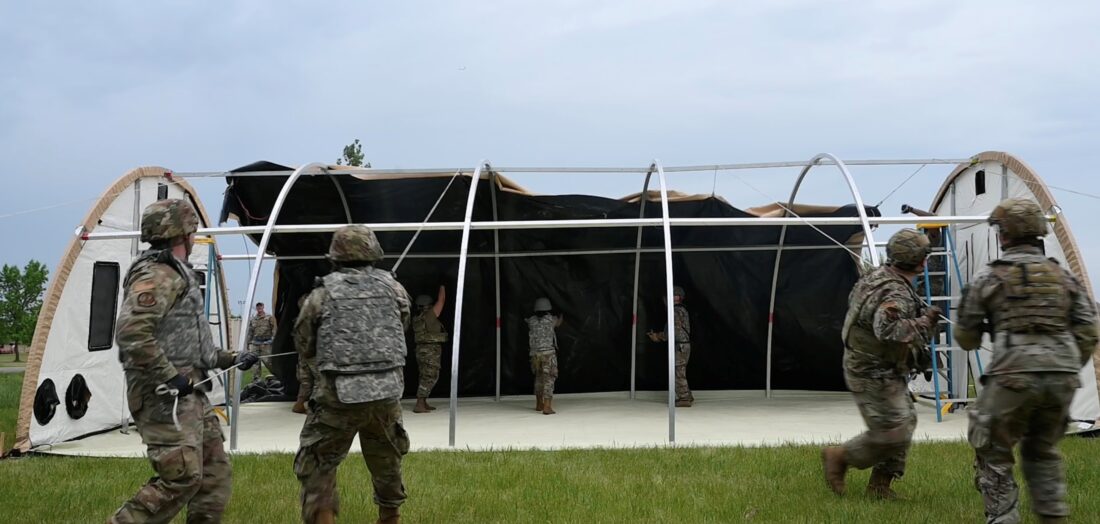
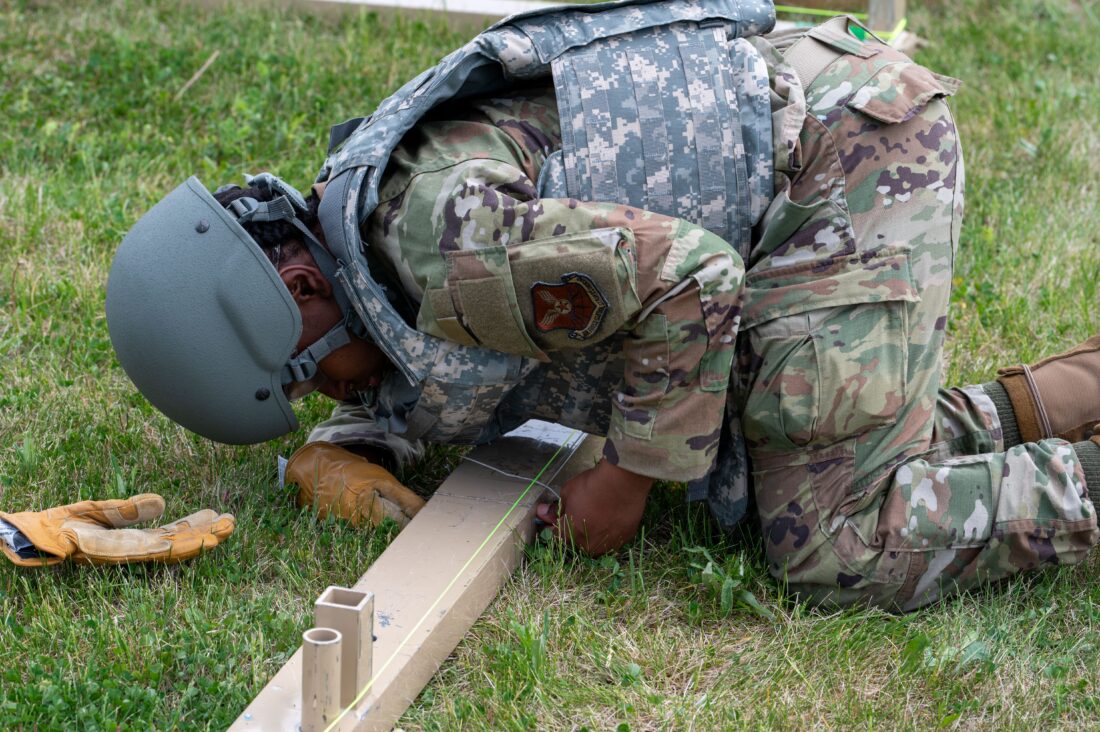
Submitted Photo U.S. Air Force Airman 1st Class Alannique Jacobs, assigned to structures, 5th Civil Engineer Squadron, builds the baseboards for a medium California tent during the bivouac exercise at Fargo Air National Guard Base May 31. Medium California tents are capable of housing large assets, serving as a maintenance bay, or operating as a command center in extreme climates. Photo by Airman 1st Class Anthony Ramey.
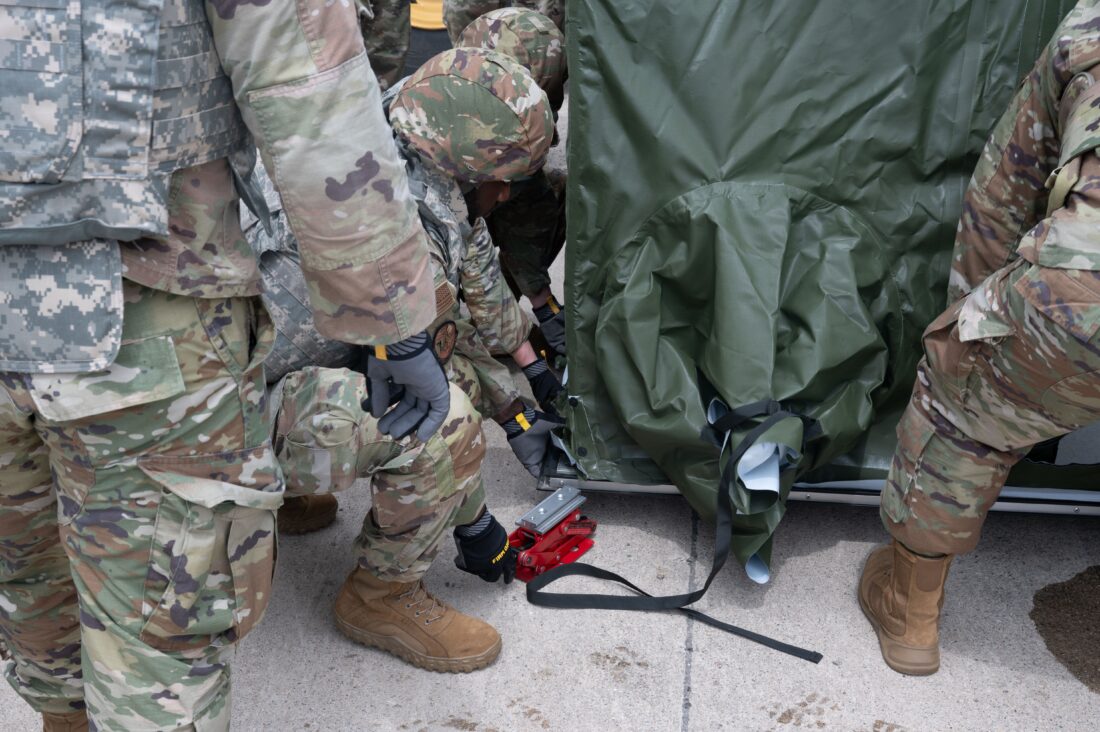
Submitted Photo A group of airmen from the 5th Force Support Squadron builds the expandable single pallet expeditionary kitchen (espek) as a part of the bivouac exercise at Fargo Air National Guard Base May 31. The espek provides safe climate-controlled environments for food prep, cooking and serving airmen while in a deployed environment. Photo by Airman 1st Class Anthony Ramey.
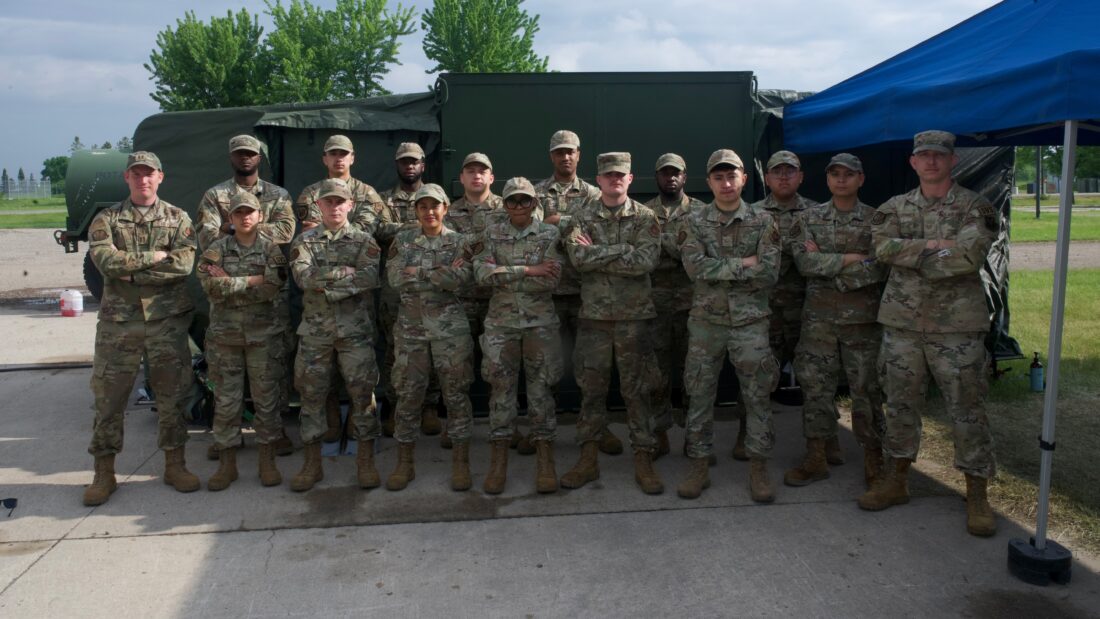
Submitted Photo A group of airmen from the 5th Force Support Squadron pose in front of the expandable single pallet expeditionary kitchen (espek) at Fargo Air National Guard Base May 31. Photo by Airman First Class Anthony Ramey.
Submitted Photo Senior Airman Mathew Plummer, pavements and equipment journeyman, 5th Civil Engineer Squadron, operates a compact tract loader while repairing a crater during the bivouac exercise at Fargo Air National Guard Base June 2. Photo by Airman 1st Class Anthony Ramey.
Submitted Photo U.S. Air Force Airman 1st Class Alannique Jacobs, assigned to structures, 5th Civil Engineer Squadron, builds the baseboards for a medium California tent during the bivouac exercise at Fargo Air National Guard Base May 31. Medium California tents are capable of housing large assets, serving as a maintenance bay, or operating as a command center in extreme climates. Photo by Airman 1st Class Anthony Ramey.
Submitted Photo A group of airmen from the 5th Force Support Squadron builds the expandable single pallet expeditionary kitchen (espek) as a part of the bivouac exercise at Fargo Air National Guard Base May 31. The espek provides safe climate-controlled environments for food prep, cooking and serving airmen while in a deployed environment. Photo by Airman 1st Class Anthony Ramey.
Submitted Photo A group of airmen from the 5th Force Support Squadron pose in front of the expandable single pallet expeditionary kitchen (espek) at Fargo Air National Guard Base May 31. Photo by Airman First Class Anthony Ramey.
Trending
FARGO -- More than 120 airmen from Minot Air Force Base recently spent four days honing expeditionary skills and strengthening mission readiness during a bivouac exercise at the 119th Air National Guard Regional Training Site in Fargo.
A bivouac is a field training exercise that places airmen in a temporary encampment designed to replicate deployed conditions. Airmen trained on contingency equipment established expeditionary-infrastructure and practiced mission essential tasks in an austere environment.
The 5th Mission Support Group (5 MSG), brought together personnel from the 5th Civil Engineer Squadron, 5th Security Forces Squadron, 5th Force Support Squadron, 5th Logistics Readiness Squadron and other mission partners to train in a simulated deployed environment.
For many participants, the exercise provided their first opportunity to work with bare base assets and practice establishing and sustaining operations from a remote location.
"We brought 124 personnel out here from across the 5 MSG," said Maj. Dylan Bechen, exercise commander and director of operations for the 5th Civil Engineer Squadron. "Our primary goal was to get our young airmen hands-on experience with contingency assets and expose them to the types of threats and challenges they could face in a deployed environment."
The training focused on foundational wartime skills required to establish and recover a contingency air base. Across the exercise, airmen completed more than 70 learning objectives tailored to their specific career fields.
Electricians practiced setting up expedient airfield lighting systems, power production specialists operated generators and aircraft arresting systems, and other engineering teams trained on equipment used to support life support areas and expeditionary operations.
The exercise represented six months of planning between squadron leaders, subject matter experts and the 119th Air National Guard Regional Training Site staff. While blue cell planners focused on logistics, transportation and training objectives, white cell planners developed realistic exercise scenarios and injects designed to challenge participants throughout the week.
For 1st Lt. Bridget Cain, white cell officer in charge, one of the key insights she took away was witnessing experienced noncommissioned officers (NCOs) work alongside younger airmen to create a successful training environment.
"The biggest thing I learned was just how awesome it is to have a team of rock stars to work with," said Cain. "Being able to trust our NCOs, lean on them and work together to execute something this large was huge."
The training also highlighted the Air Force's increasing emphasis on Agile Combat Employment and expeditionary operations, particularly in support of potential Indo-Pacific missions where forces may need to rapidly establish operations at austere locations.
"This training is important because deployments are changing," said Master Sgt. Marquis Tinsley, Base Engineer Emergency Force (Prime BEEF) manager for the 5th Civil Engineer Squadron. "Instead of going somewhere that's already built up and ready for forces, we're preparing for environments where there may be nothing there. Our airmen need to be ready to get off an aircraft, establish a base and sustain operations."
Prime BEEF is a program that prepares Air Force Civil Engineers to rapidly deploy and support infrastructure in contingency environments.
Many of the airmen participating were new to the Air Force and had little to no experience with contingency equipment. According to Tinsley, the exercise not only tested technical proficiency but also it challenged Airmen to adapt, solve problems and apply concepts under realistic conditions.
"We had airmen fresh out of technical school who had never touched some of this equipment before," Tinsley said. "What impressed me most was their resilience. Once they understood the mission and the training plan, they took ownership and exceeded expectations."
At the conclusion of the exercise, leaders emphasized that readiness remains a continuous process requiring constant training and adaptation.
"The only thing certain about life is uncertainty," Bechen said. "Our airmen are hungry and ready to get as much experience and exposure as possible. The attitude, morale and hustle we saw throughout this week showcased the readiness and dedication of our team."