MSU foundation tax exemption gets scrutiny
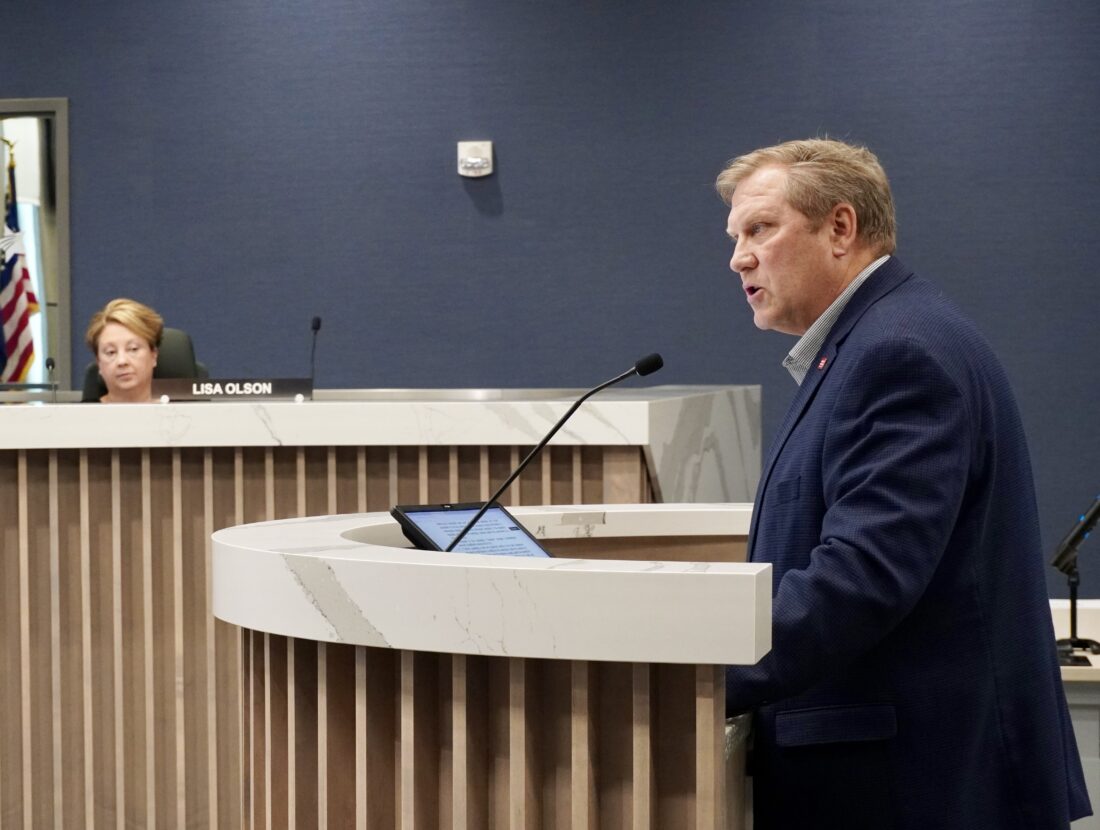
JILL SCHRAMM/MDN Rick Hedberg, vice president for Advancement at Minot State University, talks about the development foundation’s mission with the Minot Board of Equalization Tuesday, April 7. At left is board member Lisa Olson.
Despite concerns about ambiguities in state law, Minot City Council members, acting as the Minot Board of Equalization, supported continuation of property tax exemptions for the Minot State University Development Foundation Tuesday, April 7.
Minot Tax Director Ryan Kamrowski had proposed removing exemptions on 13 foundation properties based on interpretation of state law. The foundation appealed the new assessments, which included the downtown career and technical center, parking lots and apartments and rental houses.
Kamrowski said the properties were excluded because they did not meet the clear, definitive use as promoting athletic and educational purposes under state law. He said there is a gray area in the interpretation of eligibility for tax exemption, especially on rental properties, as well as contradictions with how other exemptions are applied on similar properties in the city. He assessed the properties, giving the foundation the opportunity to appeal so boards could work through those questions. Had the city board upheld the assessments, the foundation could have appealed to the county’s and potentially to the state’s equalization boards.
Jon Backes, president of the foundation and an attorney, said he believes the foundation property is exempt under state law.
“I think there’s a pretty good argument that all the property that the foundation owns is exempt,” he said. The foundation hasn’t applied for exemptions on properties rented to for-profit entities, even though it is not certain whether the Legislature intended it to be exempt, he said. However, the foundation is confident that the properties that currently are exempt meet the eligibility, he said.
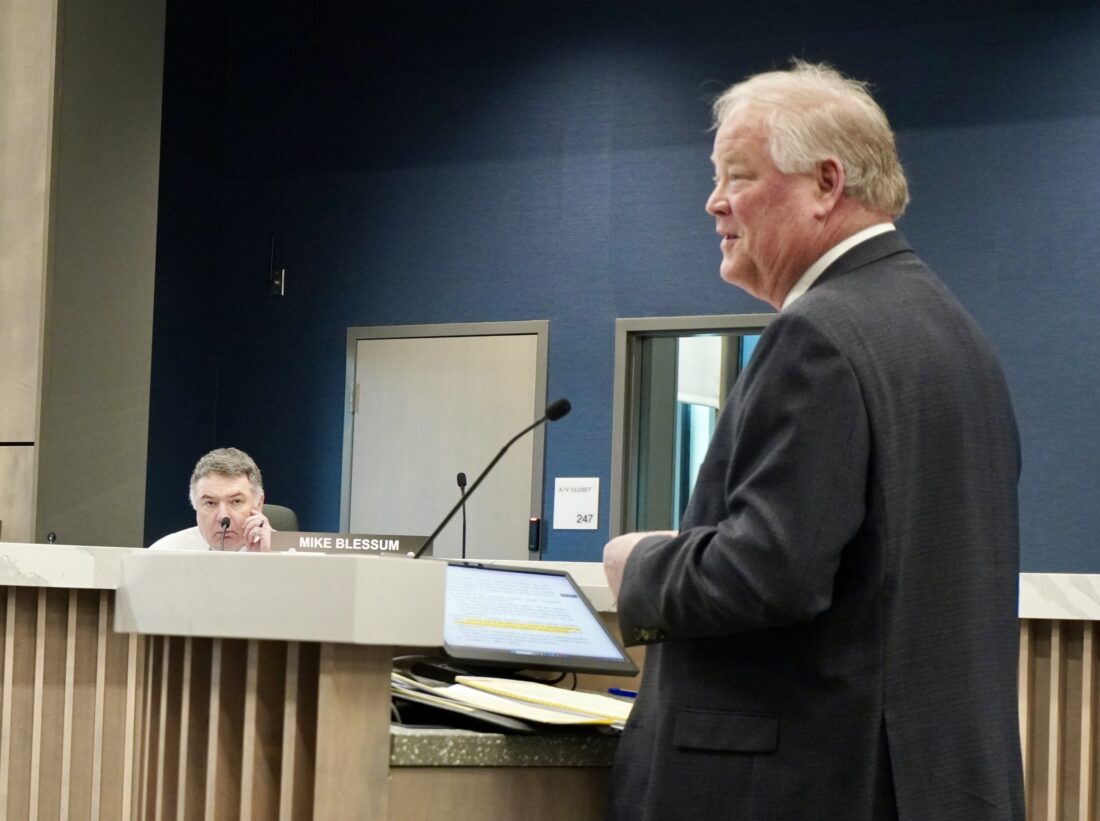
JILL SCHRAMM/MDN Jon Backes, president of the Minot State University Development Foundation, speaks to the Minot Board of Equalization Tuesday, April 7. Board member Mike Blessum listens at left.
Minot City Attorney Stefanie Stalheim said there’s not a lot of legal guidance around the section of the law exempting organizations that promote athletic and educational purposes at state institutions.
A 1996 Attorney General’s letter regarding a hotel given to the foundation at North Dakota State University stated the majority of space leased to NDSU for student housing is exempt. In the case of the MSU foundation, though, there is no lease to the university but rather housing is rented to students.
“Essentially, from what I’ve heard from the MSU folks is they use those apartment buildings like dorms to keep the rents lower, and they’re full of MSU students,” Fuller said. “Because they chose to own it in a different way so they could take that money and give it back to students and put it into MSU, should we sit here and take that exemption away from them?”
The equalization board and the foundation were particularly puzzled by the assessment placed on the CTE building because while leased to Dakota College at Bottineau for educational purposes, it is not used for athletic purposes. That led to discussion about whether the law requires a building to provide both functions or just the organization to provide both.
Stalheim said as she has continued to research the issue, her finding is the law refers to the organization rather than the building.
Rick Hedberg, foundation secretary/treasurer and vice president for Advancement at MSU, noted the state does not fund athletics so an interpretation requiring a building be used for athletics would be unusual.
“This denial of a property tax exemption will have a significant impact on Minot State University and on the foundation,” he said. “The impact, including the increased assessments, would raise our property taxes by approximately $129,000, by our estimation. That’s a significant impact on our operation at Minot State University and the development foundation. In our world of providing scholarships for students, that’s approximately 100 student scholarships – 100 fewer student scholarships for Minot State students.”
“This is not an easy decision, and I don’t think that we are going to land on exactly the right approval definition this evening. But I feel confident in what I have heard enough to say that I believe that all these properties should remain tax exempt,” board member Lisa Olson said.
“We’ve got to get this right as often as we can, and we wouldn’t even have the discussion if you weren’t at least raising the question,” Blessum told Kamrowski in support of his bringing the matter forward. “I do think we’re in a very strange spot between ‘use’ and ‘ownership,’ and everything that I can see is telling me to do ‘use.’ But I don’t know that that’s what the law reads. And so, I think the obvious answer here is to get the law fixed. But, I also think it’s not to break what the foundation has going on.
“I think what we do is we don’t upset that apple cart, but we advocate for the law to get changed,” he added.
The board approved without dissent the tax exemptions that the MSU foundation has been receiving in the past.
-
- JILL SCHRAMM/MDN Rick Hedberg, vice president for Advancement at Minot State University, talks about the development foundation’s mission with the Minot Board of Equalization Tuesday, April 7. At left is board member Lisa Olson.
-
- JILL SCHRAMM/MDN Jon Backes, president of the Minot State University Development Foundation, speaks to the Minot Board of Equalization Tuesday, April 7. Board member Mike Blessum listens at left.
Local News

‘Kites and Currents’ set at Confluence
Bismarck man dies in rollover near Towner
TOWNER — A 63-year-old Bismarck man died from injuries received in a one-vehicle rollover on Willow Road and 67th ...
MSU foundation tax exemption gets scrutiny
Spring wildfire potential remains high
BISMARCK — Despite recent snowfalls across the state, outdoor enthusiasts should remain aware of ground ...
New LWV chapters reflect interest in voter outreach