Minot region’s population holds steady
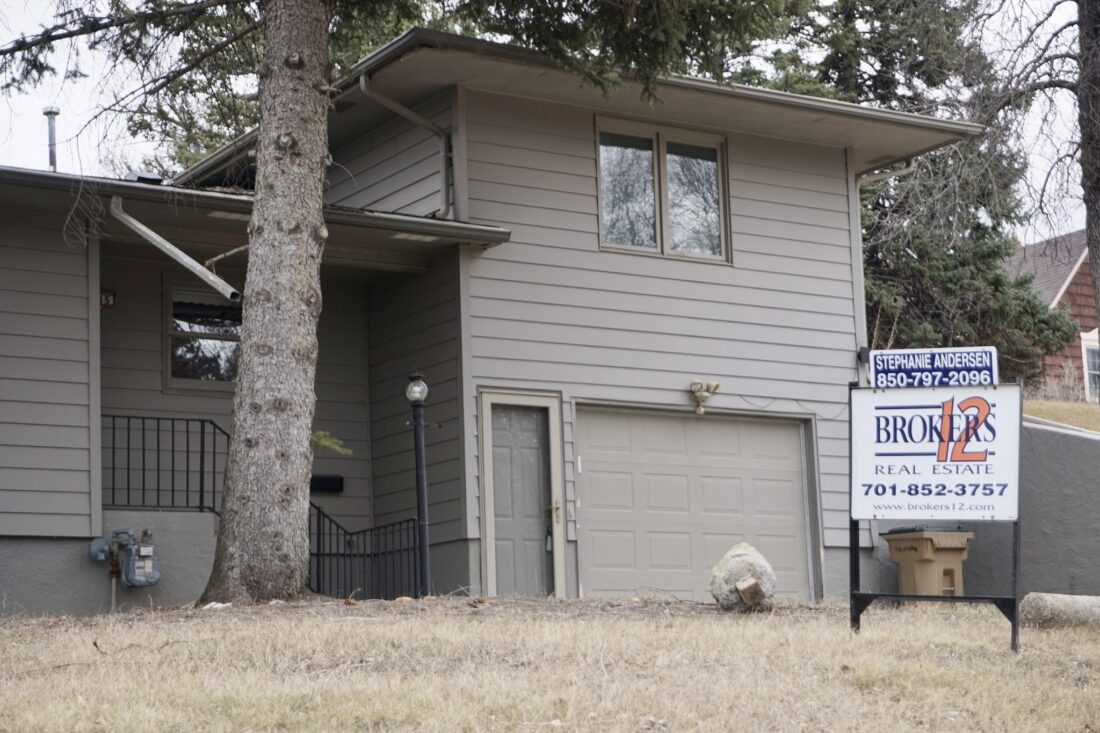
MDN File Photo A house for sale in Minot last April indicates resident movement during 2025, but population overall in the Minot region remained steady.
Minot’s metropolitan area population has remained fairly steady over the past few years, according to 2025 estimates released Thursday, March 26, by the U.S. Census Bureau.
As of July 1, 2025, the metropolitan area that includes Ward, McHenry and Renville counties was estimated at 75,694 residents, up slightly from the revised estimates of 75,649 in July 2024 and 75,683 in July 2023.
Ward County’s July 2025 population is estimated at 68,233, up from 68,186 in 2024, or nearly .07%. McHenry County lost 23 residents in the estimates for a 2025 total of 5,130. Renville County gained 21 residents for a population of 2,331.
Statewide, North Dakota’s population has been steadily climbing and was estimated at 799,358 in July 2025. The State Census Data Center predicted the existing growth rate would have had the population surpass 800,000 by last August.
Much of that growth continues to be in Cass and Burleigh counties. Cass County, including the Fargo area, accounted for about a quarter of the state’s population in the July 2025 estimates, with 201,794 residents. Burleigh County, which includes Bismarck, was estimated at 103,251 residents.
McKenzie County in the state’s northwestern corner continues to benefit from oil activity. Its population estimate grew 2.66% to 15,192 residents between July 2024 and 2025. It is up from 14,711 in the April 2020 estimates base.
Williams County, which includes Williston, saw slower growth of .03% over the year ended July 2025, with a population estimate of 41,767 residents.
Mountrail County’s estimated population dropped less than a percent with a loss of 80 residents. Its 2025 estimate is 9,395.
Twenty-six of the state’s 53 counties recorded growth in the annual estimates for 2025.
Between April 2020 and July 2025, Cass has been the fastest growing county at 9.35%, followed by Burleigh at 4.86%. McKenzie County grew 3.27%, Grand Forks 1.8% and Williams 1.2%. Ward saw a 2.4% decline.
More than half, 56%, of the state’s population is congregated in the state’s four largest counties of Cass, Burleigh, Grand Forks and Ward. Despite that, some of North Dakota’s most rural counties are holding their own, either due to energy activity or other reasons. The state’s third smallest county, Sheridan County in central North Dakota, is estimated at 1,296 residents, up from the April 2020 base of 1,267.
Billings County, home to Medora in southwestern North Dakota, is estimated at 1,071 residents, up from its 2020 base of 943. Its neighbor, the state’s smallest county, Slope, lists 628 residents in the estimates, reflecting a steady drop from 701 residents over five years.
Census calculations, which can be less accurate for small population areas, include various datasets for measuring births, deaths and estimated net migration.
Local News
Credit union donates to health foundation

Vietnam veterans celebration set for Monday

Ward County shooters finish strong at 4-H air rifle event

Ward County 4-H archers earn top finishes
Sun Country returns Vegas flight to Williston
WILLISTON – The City of Williston announced the return of seasonal nonstop service between Williston Basin ...