Air Force leaders visit Minot AFB to assess ICBM modernization
-
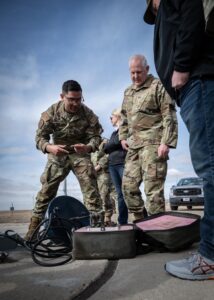
- Submitted Photo U.S. Air Force Tech. Sgt. Jaime Kerr, left, 91st Missile Maintenance Squadron technician, briefs U.S. Air Force Gen. Dale White, right, Department of War direct reporting portfolio manager for critical major weapon systems, at Minot Air Force Base March 20. The visit allowed White to see firsthand the infrastructure and operational requirements for the upcoming transition to the LGM-35A Sentinel intercontinental ballistic missile system. U.S. Air Force photo by Senior Airman Alyssa Bankston.
-
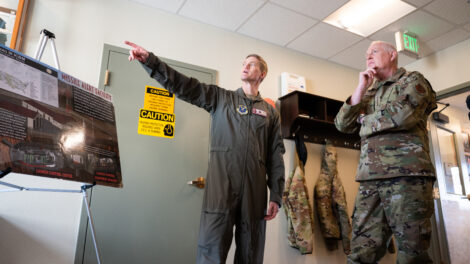
- Submitted Photo U.S. Air Force Lt. Col Nicholas Gydesen, left, 91st Operations Support Squadron commander, briefs U.S. Air Force Gen. Dale R. White, right, Department of War direct reporting portfolio manager for critical major weapon systems, at Minot Air Force Base March 20.These engagements ensure Sentinel program leaders deliver a capability that is modern, executable and aligned to the realities of the mission for the airmen who operate it. U.S. Air Force photo by Senior Airman Kendra A. Ransum.
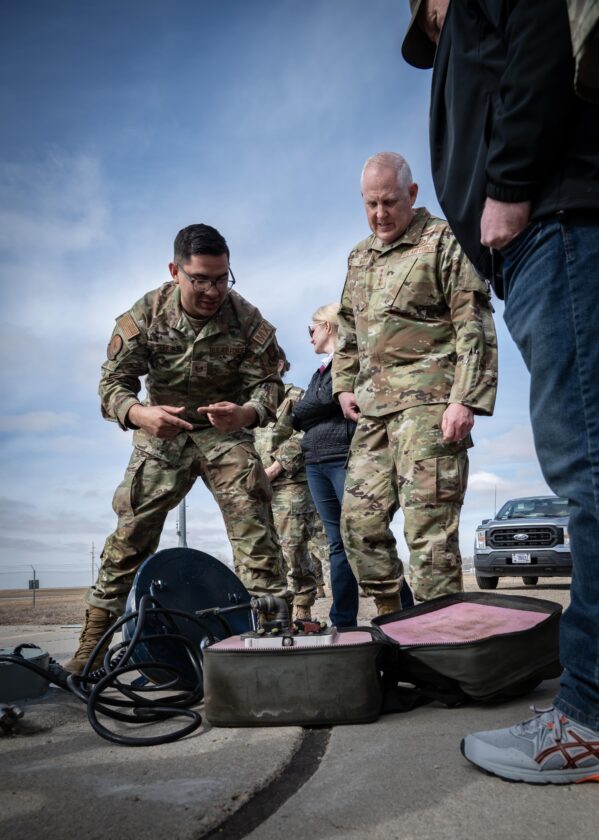
Submitted Photo U.S. Air Force Tech. Sgt. Jaime Kerr, left, 91st Missile Maintenance Squadron technician, briefs U.S. Air Force Gen. Dale White, right, Department of War direct reporting portfolio manager for critical major weapon systems, at Minot Air Force Base March 20. The visit allowed White to see firsthand the infrastructure and operational requirements for the upcoming transition to the LGM-35A Sentinel intercontinental ballistic missile system. U.S. Air Force photo by Senior Airman Alyssa Bankston.
MINOT AIR FORCE BASE — U.S. Air Force Gen. Dale White, Department of War direct reporting portfolio manager for critical major weapon systems, visited Minot Air Force Base March 19-20, to assess mission requirements and ongoing preparations supporting the Sentinel intercontinental ballistic missile system modernization efforts.
The visit focused on ensuring alignment between program development and operational execution as the Air Force prepares to transition from the Minuteman III system to the LGM-35A Sentinel.
“The Sentinel program is foundational to our nation’s security, which is why these engagements with our operational airmen are so critical,” White said. “It’s my responsibility to ensure the capability we deliver is not only modern, but executable, sustainable and aligned to the realities of their mission. My ultimate accountability is to the warfighters operating this mission around the clock; they deserve a weapon system that honors their unwavering commitment to our nuclear deterrent.”
The Sentinel represents a comprehensive modernization of the land-based leg of the nation’s nuclear triad, replacing aging Minuteman III infrastructure with a modernized, flexible weapons system. The program includes plans to fielding 400 missiles and modernizing 450 launch facilities and more than 600 supporting facilities across the United States, with initial capability expected in the early 2030s.
During the visit, White met with airmen and leaders across the installation to better understand operational considerations, infrastructure requirements and the phased approach to transition. At Minot, Sentinel Site Activation Task Force Detachment 12 is leading efforts to prepare for the system’s arrival, including managing early planning, deactivation sequencing and construction integration.
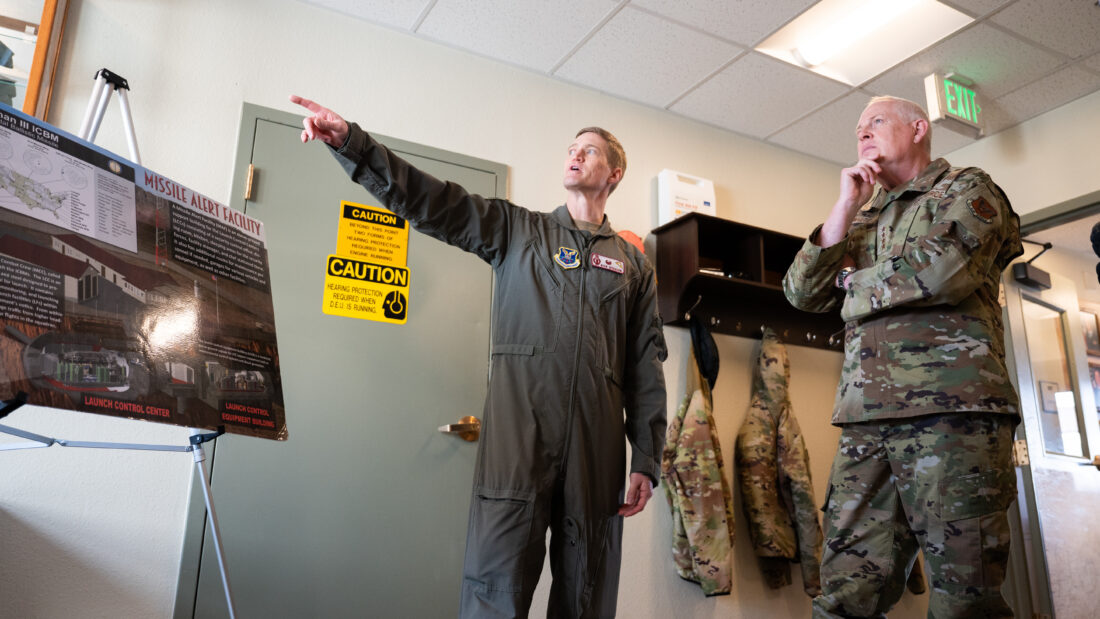
Submitted Photo U.S. Air Force Lt. Col Nicholas Gydesen, left, 91st Operations Support Squadron commander, briefs U.S. Air Force Gen. Dale R. White, right, Department of War direct reporting portfolio manager for critical major weapon systems, at Minot Air Force Base March 20.These engagements ensure Sentinel program leaders deliver a capability that is modern, executable and aligned to the realities of the mission for the airmen who operate it. U.S. Air Force photo by Senior Airman Kendra A. Ransum.
“The transition to Sentinel is a once-in-a-generation effort that requires close coordination between our Airmen, industry partners, and program leadership,” said U.S. Air Force Col. James Schlabach, commander of the 91st Missile Wing. “Our team is focused on conducting precision operations for Minuteman III as long as it’s needed, while ensuring we are ready to execute the transition to Sentinel.”
The Air Force continues to advance the Sentinel program through ongoing missile development and testing, supply chain stabilization and refinement of a modular, repeatable construction approach designed to improve efficiency and cost predictability at scale.
“This is about delivering credible deterrence on a predictable cost and schedule,” White said. “We are applying lessons learned early, reducing risk where we can and ensuring the system we field is ready for airmen to operate on day one.”
Local News
Stanley foster parents enter pleas in murder case
A Stanley couple charged in the death of a three-year-old foster child in their care have pleaded guilty to murder ...

Pretrial hearing held for Christmas Eve shooting case
Air Force leaders visit Minot AFB to assess ICBM modernization
Public comment period open for CDGB plan
The City of Minot has announced the 30-day public comment period is open for the PY 2026 Community Development ...

Convicted murderer sentenced for weapons possession