
Caring for hearts in more ways on Valentine’s Day
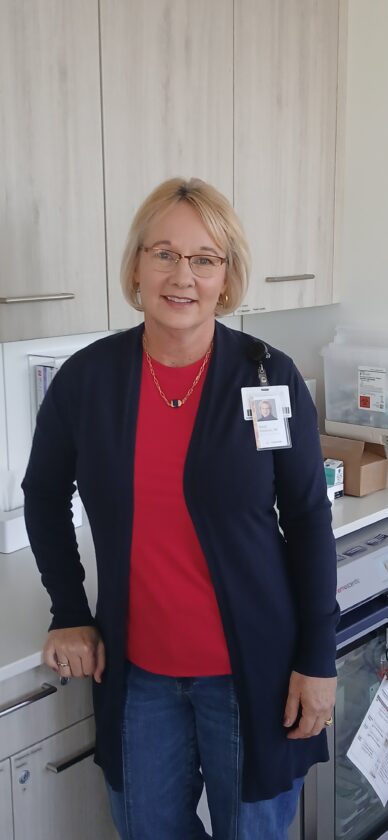
WENDY HARPER/MDN Heidi Peterson, nurse practitioner at VitellaCare, encourages patients to prioritize annual preventive exams, nutrition and physical activity as part of American Heart Month and Valentine’s Day heart health awareness.
As Valentine’s Day fills the calendar with reminders of love, connection and relationships, February also marks American Heart Month, a national observance focused on raising awareness about cardiovascular disease and prevention.
While the holiday often centers on romantic gestures, health professionals say it also provides an opportunity to reflect on how people care for their hearts physically, emotionally and mentally.
Heidi Peterson, nurse practitioner with VitellaCare in Minot, said heart health begins with prevention and routine care.
“The number one thing that I would recommend is to get in for your annual preventive care exam,” Peterson said. “The second is maintaining an active lifestyle, and the third would be a good, healthy diet.”
Those annual visits play a critical role in identifying risk factors before serious symptoms develop.
“At that visit, we’re looking at blood pressure, blood sugar, cholesterol numbers and kidney function,” Peterson said. “All of those are clues.”
According to Peterson, one of the most persistent misconceptions she encounters is the belief that heart disease always presents with obvious warning signs.
“People feel as though if they have heart disease, they should feel sick,” she said. “But oftentimes the symptoms can be very subtle. It may be low motivation, low energy, dull headaches in the morning or not sleeping well.”
Because symptoms can be vague, she stresses the importance of early detection.
“Early detection is absolutely imperative to decrease the incidence of heart disease,” Peterson said. “I encourage all persons to get into their medical provider for preventive care exams.”
Heart disease remains one of the leading health concerns nationwide. Peterson noted that roughly 30% of adults have high blood pressure, a major contributor to cardiovascular complications.
Education and communication, she said, are essential components of prevention, particularly when working with diverse patient populations.
“I try to meet patients where they’re at,” Peterson said. “We talk about what they’re doing now for exercise, what their stressors are and what their lab values show.”
When barriers arise, clinics work to bridge those gaps.
“If patients need additional handouts or an interpreter, we can set that up,” she said. “It’s about making sure they understand their health at their level.”
Nutrition counseling is another cornerstone of cardiovascular care, especially for individuals managing chronic illnesses such as diabetes.
“When patients require more specialized education, referrals can be made to diabetic educators for additional counseling and coaching,” Peterson said. “We also provide handouts that support our education regarding diet and exercise.”
She added that certain populations experience elevated risk levels, making monitoring especially important.
“In some minority groups, such as African Americans, you see a higher incidence of high blood pressure,” Peterson said. “Keeping an eye on trends from year to year can help identify changes that may lead to something more serious.”
Encouraging patients to adopt healthier habits often involves addressing life circumstances beyond medicine alone.
“If someone is stressed about their living situation, domestic violence or financial burdens, it’s hard to focus on exercise or diet,” Peterson said. “We try to treat the whole person.”
That connection between emotional strain and physical health is something mental health professionals witness regularly.
Troy Roness, a licensed professional counselor and mental health therapist with VitellaCare in Minot, said chronic stress can have direct physiological effects on the cardiovascular system.
“When we consider the fight-or-flight response, inflammation and cortisol, that has a very negative impact on the heart,” Roness said. “The heart actually has up to 40,000 neurons that respond when we’re severely stressed.”
While short bursts of stress are manageable, long-term strain is far more damaging.
“Acute stress, like a flat tire on the way to work, we can manage,” he said. “But chronic stress, going through a divorce, caring for a sick loved one or dealing with ongoing trauma, the body has a difficult time keeping up.”
Over time, that strain can manifest physically.
“We can see high blood pressure, anxiety attacks, panic attacks and other contributing factors,” Roness said. “Chronic stress is one of those risk factors for heart disease.”
Mental health disorders such as post-traumatic stress disorder and generalized anxiety disorder can further compound cardiovascular risk.
“The body loses its resilience level in how it adapts and reacts to stress over time,” he said.
Therapy can serve as both treatment and prevention by helping individuals manage symptoms while addressing underlying causes.
“Coping skills are important, but they only go so far,” Roness said. “We have to get to the root issue of why the stress or anxiety is there in the first place.”
He compares coping strategies to mowing a lawn.
“It looks great for a while, but unless you get to the root of the weeds, it’s going to grow back,” he said.
Mental health challenges often present through physical warning signs.
“The body always talks to us,” Roness said. “Headaches, poor sleep, panic attacks, increased heart rate, those can all be signs that something deeper is going on.”
Rather than ignoring symptoms, he encourages individuals to reflect on their sources.
“If I have a headache, I might ask, did I have a fight with my spouse? Did I have a rough day at work? There are reasons our body gives us signals,” he said.
Lifestyle evaluation is another key component of emotional and cardiovascular health.
“Ask yourself what’s within your circle of control,” Roness said. “Look at your support system, your work life and your social life. Are there things supporting you, or pulling you down?”
Mindfulness practices also can help regulate stress responses.
“If I live in the future, it’s usually fear and anxiety. If I live in the past, it’s sadness or regret,” he said. “Staying present through mindfulness, meditation or breath work can be very helpful.”
Work-life balance plays a role as well.
“Establishing emotional, physical and financial boundaries helps create a healthier balance,” Roness said.
Both providers emphasize that heart health requires a comprehensive, whole-person approach.
Peterson encourages patients to take an active role in monitoring their health through tools such as home blood pressure cuffs and heart-rate tracking technology, along with maintaining follow-up care.
“A home blood pressure cuff is wonderful,” she said. “If there are concerns, we can compare readings in the clinic and make sure everything is accurate.”
For those newly diagnosed with heart conditions, she stresses the importance of communication and consistency.
“Ask all the questions,” Peterson said. “Follow the plan of care your provider sets out. If you’re not understanding something, we need to do better.”
Roness echoed the importance of ongoing emotional care, noting that even mental health professionals prioritize their own wellness.
“Everybody needs someone to talk with,” he said. “We all need a tune-up.”
As Valentine’s Day and Heart Month intersect, both professionals say the message extends beyond romance.
Caring for the heart, they say, means prioritizing preventive care, managing stress, building support systems and recognizing that emotional and physical health are deeply connected. From screenings and nutrition to mindfulness and therapy, tending to the heart in every sense may be one of the most meaningful acts of love people can offer themselves and those around them.
-

- WENDY HARPER/MDN Heidi Peterson, nurse practitioner at VitellaCare, encourages patients to prioritize annual preventive exams, nutrition and physical activity as part of American Heart Month and Valentine’s Day heart health awareness.
Local News

Legislature’s ballot measures face opposition
Suicide prevent course offered in Minot
NDSU Extension is offering a free QPR Suicide Prevention Certification training on Wednesday, Feb. 25, from 3-4:30 ...
SWC approves Mouse River flood protection funds
BISMARCK – Souris River Joint Board was awarded $81.1 million for Mouse River flood protection for 2025-2027 by ...
Spirit of Hostfest lives on in shared memories of good times
Warm memories remain for many who worked on the frontlines and behind the scenes to make Norsk Hostfest happen ...
Caring for hearts in more ways on Valentine’s Day
As Valentine’s Day fills the calendar with reminders of love, connection and relationships, February also marks ...
Suspect charged with child abuse
A Minot man charged with felony child abuse made his initial appearance in North Central District Court on ...