
Prairie Fare: Why do we eat what we eat?
Some food guidance in US has changed in last century, other advice remains evergreen
Trending
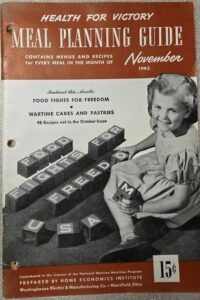
"You probably looked like the little girl on the cover," my husband commented.
"I wasn't alive in 1943, but she does look a little like me, I suppose," I remarked as I looked at the pin-curled blonde girl in a vintage dress.
I was looking at a "Health for Victory Meal Planning Guide" prepared by the Home Economics Institute during World War II. My set of antique magazines inspire me sometimes.
What did people eat 83 years ago? Why did they choose those foods?
Further, why do we choose the foods we eat now?
We make decisions about what to eat for many reasons, including what's available and affordable, our time and food preparation skills, and our personal tastes. Your diet may be influenced by advice from a health care or nutrition professional.
You have probably heard about the U.S. Dietary Guidelines released in January 2026. When did dietary guidelines first appear in the U.S.?
The first food guide was promoted from 1916 (the time of World War I) to the 1930s. It was called "Food for Young Children" and "How to Select Foods." Early nutrition and health professionals were becoming more aware of the link between specific nutrients and health.
During World War II, "A Guide to Good Eating" ("The Basic 7") was released to promote a healthy population overseas and in the U.S. through seven food groups.
Group 1 included green and yellow vegetables. Group 2 consisted of oranges, tomatoes and grapefruit. Group 3 included potatoes and other vegetables and fruits. Group 4 featured milk and milk products. Group 5 included meat, poultry, fish, eggs, dry beans, nuts and peanut butter. Group 6 consisted of bread, flour and cereals. Group 7 consisted of butter and fortified margarine with added vitamin A, with the note to "consume in moderation."
During World Wars I and II, families were advised to produce food, including victory gardens in plots everywhere from backyards to parks and schoolyards. People were urged to conserve food by canning and to avoid food waste. Sharing food with neighbors and others who did not have enough to eat was encouraged.
This advice stands the test of time.
During World War II, families received ration books with stamps to obtain foods that were in shorter supply, such as sugar, coffee, butter, meat, fat, canned goods and dairy.
From the mid-1950s to the 1970s, the "Basic 4" food groups were promoted. The "Hassle-Free Daily Food Guide" appeared in 1979. The latter added a food group to eat in moderation: fats, sweets and alcohol.
The original "Food Guide Pyramid" was introduced in 1992. It remained until 2005 when MyPyramid, a colorful version with vertical stripes representing food groups, was released. Then in 2011, MyPlate was introduced to provide a visual image of five food groups on a sectioned plate, which encouraged variety.
After an absence of more than 20 years, a Food Guide Pyramid has reappeared, but it's flipped upside down, as you may have seen.
I wasn't around for the last 100 years of nutrition advice, but I have been a registered dietitian for more than 28 years. These are some recommendations I have gleaned from current and past guidance:
¯Eat a variety of foods in moderation.
¯Consume plenty of vegetables and fruits in various forms: fresh, frozen, canned or dried.
¯Eat a variety of protein foods throughout the day, including meat, poultry, eggs, nuts, dry beans and lentils.
¯Incorporate more whole grains in your diet.
¯Hydrate yourself with water regularly.
¯Include healthy fats from a variety of sources. Limit saturated fat to no more than 10% of your calories.
¯Get your calcium-rich foods. Dairy is an excellent source. If you cannot consume dairy due to an allergy or intolerance, explore other foods and beverages rich in calcium.
¯Limit highly processed foods that are high in added sweeteners and salt. Read and compare nutrition labels.
¯Limit alcoholic beverages or avoid them altogether, especially during pregnancy.
We all eat for various reasons. I hope that your health, as well as enjoyment of food, plays a role in guiding your choices.