
State commander of DAV discusses Vietnam, serves community
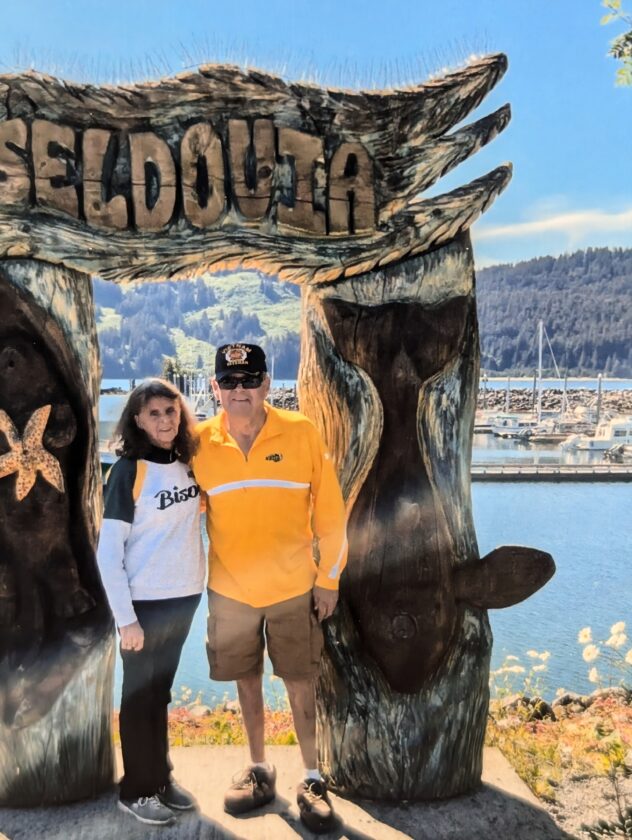
Doug Benjamin, right, stands with his wife, Kathy, in front of the town sign for Seldovia, Alaska, this past summer.
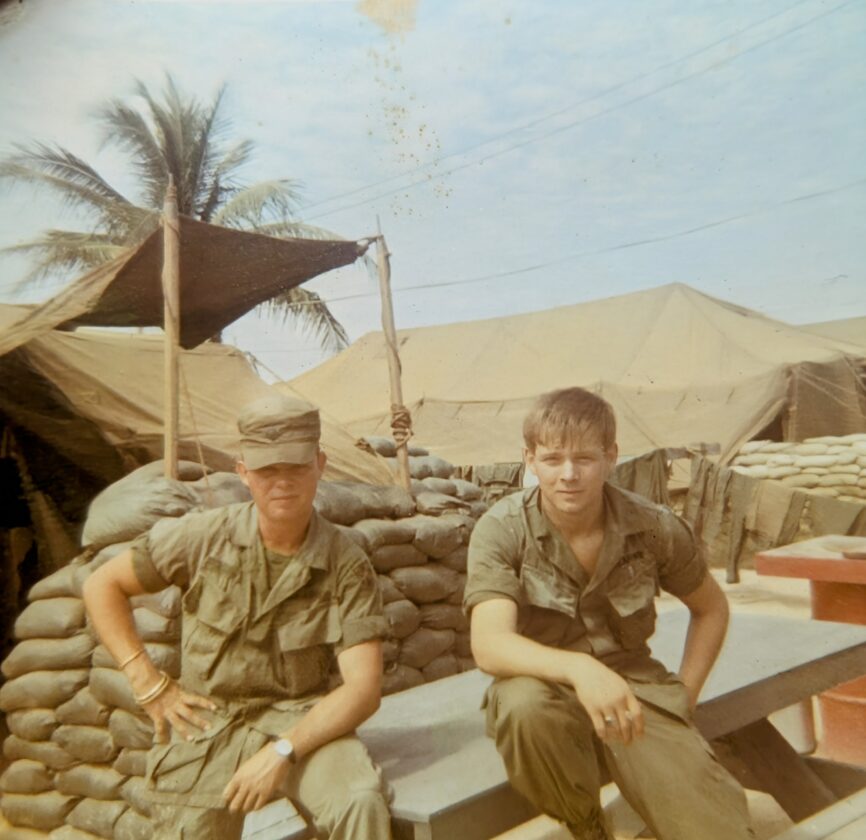
Doug Benjamin, right, sits next to Tommy Cook, left, in Vietnam in 1969. Benjamin and Cook were both part of the transportation unit.
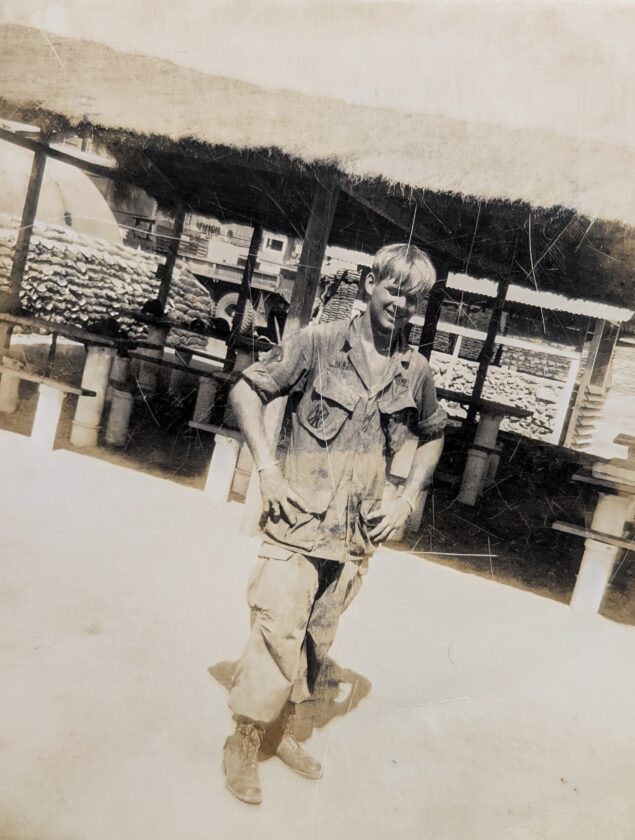
This photo of an 18-year-old Doug Benjamin was taken in Vietnam in 1969. Benjamin served in the United States Army from 1967-1973.
Doug Benjamin, right, stands with his wife, Kathy, in front of the town sign for Seldovia, Alaska, this past summer.
Doug Benjamin, right, sits next to Tommy Cook, left, in Vietnam in 1969. Benjamin and Cook were both part of the transportation unit.
This photo of an 18-year-old Doug Benjamin was taken in Vietnam in 1969. Benjamin served in the United States Army from 1967-1973.
Trending
The state commander of the North Dakota Department of Disabled American Veterans (DAV), Doug Benjamin, enlisted in the United States Army in 1967 when he was just 17 years old.
Benjamin, born and raised in Minot, decided to enlist in the Army one month after his 17th birthday.
Benjamin knew he wanted to enlist rather than be drafted.
"If you were drafted, more often than not you became an infantryman. You didn't have that choice of what you wanted. When you enlisted, you could choose an occupation if you were qualified for it," he said.
Infantrymen typically engage with the enemy in close-range combat.
"I guess you would call it front lines, but we didn't really have a front line in Vietnam. It was everywhere. I mean, it was just wherever you were at," Benjamin said.
After eight weeks of basic training in Fort Lewis, Washington, Benjamin was initially assigned to Fort Huachuca in Arizona for about seven weeks of truck driving school and was stationed in Fort Stewart, Georgia, before being sent to Vietnam.
"They couldn't send me to Vietnam until I was 18," he said.
From the beginning, Benjamin knew he wanted to do transportation and so requested the job when he enlisted.
"I had an uncle that was in the Army in World War II - Lester Nicholson. When I told him I was going to join the Army, he said, 'Whatever you do, get yourself a job in transportation, because at least you've got a ride,'" Benjamin said.
"I think Les probably walked all the way across Europe from the invasion in Normandy and right on into Berlin. I don't think he had a ride anyplace," Benjamin said. "He always told me that transportation's the way to go and I enjoyed driving trucks. I've done it all my life now up to this point."
After Benjamin ended his service in 1973, he continued to drive trucks as a living.
"In the school we were taught to drive everything from the Jeeps up to the 10 ton trucks," he said. "I enjoyed all of it." The 10 ton trucks were basically heavy duty tractor trucks used for hauling heavy equipment.
"Again, this was something I carried with me all my life is the ability to handle trucks," Benjamin said. "The military vehicles are a little bit different. They're a little odd looking. They don't have the luxuries that today's trucks have, the civilian trucks."
Disabled American Veterans
Benjamin was in Vietnam for one year before he was transferred to Fort Benning, Georgia, and then to Germany.
"There was 2,700,000 men and women who served in Vietnam, and of that number now, they say there is less than 900,000 of us alive," Benjamin said. "So we lose them every day, you know, and we're getting old."
Many Vietnam veterans experienced negative health effects from their exposure to Agent Orange during the war.
"There wasn't anybody that spent any time in Vietnam that didn't experience Agent Orange at that time," Benjamin said.
Benjamin explained how the war efforts needed the chemical pesticide at the time to kill the elephant grass so enemy snipers could no longer hide in the grass.
"When they sprayed that elephant grass with Agent Orange, in two or three days, it was dead," he said. "So it was needed. I won't argue that, but it was deadly, every place you walked."
The U.S. government has acknowledged a list of presumptive diseases that have been linked to servicemen's and women's exposure to Agent Orange. Veterans exposed to Agent Orange who have these presumptive diseases are eligible for VA disability compensation.
Benjamin's interest in making sure veterans get help for their disabilities and settle their disability claims led him to join the Disabled American Veterans (DAV).
"I'm a member of all the veterans organizations from the VFW and the American Legion to Vietnam Veterans of America. I am active in the VFW locally, but the DAV has always been my passion," he said.
From 2019-2022 Benjamin served three terms as commander of the DAV Chapter 4 in Minot. Since then, he has become involved at the state level and is the state's DAV commander.
"I travel to each one of the chapters throughout the state and attend their meetings and get ideas from them," Benjamin said. "It is time consuming but I've enjoyed it immensely."
In this position, Benjamin also will be serving on the Veterans Legislative Committee for the state this year.
"We will find legislators that will introduce bills that we feel will help the veterans of North Dakota," he said.
One of the resources the DAV has at its disposal is a transport van that is used to transport veterans to and from hospitals and clinics for appointments and medical care.
"Whether it be to file a disability claim and follow up on it and get it to the VA, or whether it's to help a veteran get to a medical appointment or if a veteran is in need of something else," he said, "it's up to us to make sure that either we provide the way for them to do it or we can find a way for them to do it."
Community
The DAV welcomes all branches and all veterans and is not exclusive to wartime veterans.
"If you have any injury that you occurred while you were in the military and doing military service, you are entitled to some type of disability," Benjamin said.
One of Benjamin's goals with the DAV is to promote counseling for veterans.
"We lose an average of 22 veterans a day to suicide. We need to stop that," he said. "We're trying our best to get counseling for these people."
Benjamin has experienced the benefits of counseling.
"It works," he said. "It's almost necessary and it's strange that it's not required on discharge."
Along with counseling, community can help veterans process some of their experiences together.
"I feel more comfortable around veterans. They're the people that I trust most," Benjamin said.
"There's so many things that no one can talk about comfortably, and so we avoid them. But when you look across the table at another vet, you know they're going through the same thing you are."
Benjamin made some of his best friends during his service and lost one of his closest friends he served with to lung cancer two years ago.
Benjamin's father, Curtis Benjamin, served in the U.S. Navy as a gunner's mate and Benjamin's son, Mike Benjamin, served in the Marines in Desert Storm and then served in the National Guard.
"I enjoyed the Army. I have no regrets for it. I would certainly do it over again if I had the choice to make. Not only did I make a lot of friends but I learned things as a young man that helped me through life," Benjamin said.
"There's places I've seen that I have to thank the Army for," he said. "They sent me to Germany and I had about two and a half years there in Europe. The idea of traveling to Europe just excited me. I knew at that point in my life, it didn't look like I'd ever have enough money to go there on my own. If the Army would send me, I thought it'd be a good deal, and it was."
After his service there, Benjamin spent some time in Georgia before returning in 1977 to Minot, where he continues to live with his wife, Kathy.