
Summit spotlights rural suicide prevention
Trending
A U.S. Army veteran, Vernon "Longhorn" Davis was spiraling toward suicide before a fellow veteran stepped into his life to adjust his perspective.
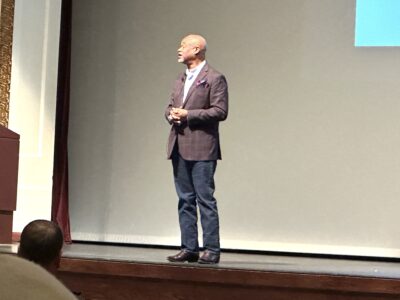
Davis spoke at the Rural Veteran Suicide Prevention Symposium sponsored by Minot State University and Together With Veterans at Ann Nicole Nelson Hall on Monday.
Together with Veterans is a community-based suicide prevention program for rural veterans and their communities that implements community-based suicide prevention programs and strategies.
The purpose of the summit was to inform local mental health professionals, military leadership, healthcare workers, first responders who interact with veterans on topics such as adverse childhood experiences, military culture and service and de-escalation techniques.
Davis, the keynote speaker, related his own experiences and struggles with suicidal ideation upon his return to civilian life. Davis said he was a fourth generation service member, having descended from a buffalo soldier, a Tuskegee airman and a Vietnam veteran. Upon completing his service as a combat medic, Davis returned home to his family in Topeka, Kansas, with few prospects.
While working at an oil change business, Davis suffered life threatening injuries after being hit by a truck and was in a coma for three days.
"I was depressed because I couldn't take care of my family. I had anxiety because I couldn't take care of my family. I couldn't find a job. When I got out of the Army, it wasn't even 'thank you for your service.' It was, 'Alright you're done. Give us your address and we'll mail you your last check unless you owe us some money,'" Davis said. "There was no camaraderie. There was nobody I could go to to say, 'Help me.' There was nobody I knew to go to, because I was out of the Army. I had had enough. I figured it would be safer and better if I'd just die."
Davis said he was pulled out of his spiral when another veteran and his family, also facing hard times, moved into their home to get back up on their feet. Davis said he and the other veteran clicked instantly, and their conversations gave him the perspective he needed to cut through the fog and despair he was living in.
"He was stuck to my hip. He was giving me positive affirmations. 'You got kids and a wife who are lucky to have you.' He did this Wednesday, Thursday, Friday, Saturday. On Saturday, I was supposed to be gone by five o'clock. That was my check out time. You know what I was doing on Saturday? I was in the backyard with a barbecue grill making burgers and hotdogs for my kids and his kids," Davis said. "I had a veteran that didn't know and doesn't know to this day, that saved my life. Because of him, I'm still here. Because of him, I can tell this story."
Davis applauded the first responders, case workers and social workers in attendance, saying they were the "saving grace" for so many who find themselves experiencing such depths of the human experience.
"Sometimes when you get to us, we've given up everything but our last breath. This is why you are so important. Some of us can't see that light. Some of us can't find that next breath. If it hadn't been for that other soldier that I barely knew, I wouldn't be in Minot," Davis said. "You don't have to do what you do. You could make a paycheck doing something else. You're put in that person's path for a reason. We have lost too many. We're going to lose too many. My story is not unique. I just happen to be one of the lucky ones."
Other summit speakers included Minot Mayor Tom Ross, Aaron Moss with the Minot Vet Center, U.S. Army National Guard military outreach specialist Nicole Frolich and writer Amy Allender-Smith, who delivered a session on a military spouse's perspective on suicide and mental health.