
Closures bring questions of enrollment
Trending
The recent decision by the Minot Public School Board to close McKinley and Bell Elementaries was preceded by a great deal of public discourse, which has only increased in the days following the fateful Feb. 29 meeting.
Two points of contention raised by members of the public in the wake of the MPS board's decision included the projected class sizes for the upcoming school year at the two schools and the perceived lack of Title I services for these students at their new schools.
One individual who contacted The Minot Daily News took issue with enrollment numbers provided by board member Jim Rostad at the Feb. 29 board meeting, in which he stated data presented to the board indicated projected class sizes at McKinley and Bell were half or less than half of the class sizes at other schools in the district.
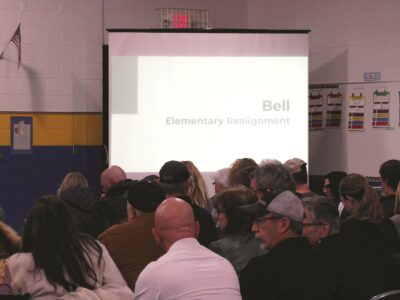
This enrollment data was shared during presentations from Elementary Assistant Superintendent Bryn Iverson at the public hearings held at McKinley on Feb. 12 and Bell on Feb. 13 and reflected the projected enrollment based on students residing in each school's attendance area. Iverson said the projected counts didn't include students residing outside the attendance area, who were instead counted with their home school, tuition-waived students and students who have requested to attend school at Minot Air Force Base.
Despite anecdotes from families and parents at both meetings who had hoped their younger children also would be able to attend the schools in the future, the enrollment at McKinley was projected to be 66 total students K-5 and 71 students at Bell for the 2024-2025 school year. Both schools were projected to have two classes each in the single digits.
The district's demographic studies and the accompanying data were referenced at multiple meetings leading up to the decision to close the schools and proved to be a major driver behind the decision for Rostad, who questioned the fairness to taxpayers to continue subsidizing the smaller class sizes at the schools.
The board would vote 3-2 to approve Rostad's motion, which also approved the transfer of Bell Elementary students and five teachers to John Hoeven Elementary, and the reassignment of six classroom teachers and one Title I teacher within the district.
According to information from the North Dakota Department of Public Instruction, Title I services can either take the form of a schoolwide comprehensive program to improve outcomes for all students in attendance or targeted assistance to assist eligible students in elevating their individual academic achievement.
Title I programs require 40% or more of a school's students to be living in poverty, which qualifies the school to receive funds to operate either the schoolwide or targeted assistance program based upon a needs assessment. Even if a school doesn't qualify for the schoolwide approach, they are still eligible to pursue targeted assistance for students who qualify individually.
Targeted assistance for students is determined by their schools based on their failure or risk of failing to meet North Dakota's state academic standards. Other factors taken into consideration, according to NDDPI, include students who are economically disadvantaged, those with disabilities and those who are migrants or have limited English proficiency. Eligible students then receive special assistance in core academic areas such as English, reading and language arts, mathematics, science, history and geography.
MPS Superintendent Mark Vollmer clarified that while John Hoeven Elementary does not currently have a Title I program, all qualifying Title I students transferred following the closure of Bell Elementary will still receive targeted assistance.
"We're going to make sure those students continue to get the help they need." Vollmer said.