
Division remains with split vote
Trending
The majority of the Minot City Council pulled away from reviving a human relations committee Monday, rejecting both the existing ordinance and a proposed new ordinance.
The council voted 4-3 to eliminate an inactive human relations committee ordinance that has been on the books since 1976. It also rejected a revised ordinance prepared through the work of ad hoc committee meetings from August through November.
"I don't know that there is an absolute right decision to make because I think all of us here, and many of the people in the audience, want to make Minot the best that it can be," said council member Lisa Olson, who co-chaired the ad hoc committee. "But putting the hope in this committee to make that difference, I don't think that it's going to be successful. What we've seen for the last nine months is it has been divisive instead of pulling people together."
"I've heard from so many people on both sides of this issue," said council member Scott Burlingame, the committee's other co-chair, "but I particularly heard from many people whose stories need to be told - people who don't necessarily feel the most welcomed in this community and people who don't feel safe."
In the end, he said, he questions whether marginalized people will find a human relations committee to be a solution or an avenue for making them targets.
"We saw people who stood up here and became targets," he said. "I refuse to do anything to revictimize people and I refuse to do anything to make Minot a less welcoming community, and I feel like this, unfortunately right now, as it's put together, has the potential to do that."
Burlingame suggested people with concerns about human relations bring them to council members individually, behind the scenes, for the city to address. Olson said the council rather than a committee needs to be the group that hears people's concerns. She added people who are looking to belong can find a group - many of which are listed at the local library - to get involved with.
Council member Carrie Evans noted the council was united in April in voting to revive the dormant human relations committee.
"Here we are eight months later with cowards who completely change your opinions and your votes and your support for the most vulnerable people in this community, and it is so disheartening," she said.
Regarding taking concerns behind the scenes or joining a group, she said defeatedly, "That's what our African American residents and our indigenous residents, our disabled residents and queer residents should do. So, thanks."
The motion to eliminate a human relations committee ordinance passed with support from Olson, Burlingame, Mark Jantzer and Mayor Tom Ross. Voting against were Evans, Stephan Podrygula and Paul Pitner.
With the decision to eliminate the ordinance, the council must take action at two future meetings to formalize repeal of the existing ordinance.
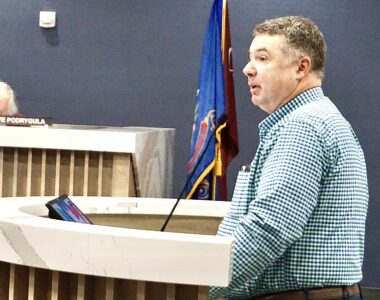
Mike Blessum, who had been a member of the ad hoc committee, spoke after the vote to say a committee doesn't solve the problem.
"These committees and government solutions to these are used as crutches for people to not actually deal with the things in the community," he told the council. "I would hope that you finalize this and that we move forward with each of us taking responsibility for making the city great."
Ad hoc committee member Denise Dykeman told the council she joined the committee for the opportunity to share what she's learned in other settings about the importance and benefits of building a diverse community.
"So, I was hugely disappointed and frustrated to learn that the mayor and city council appointed folks to the committee who were actually actively hostile to the entire thing, even going so far as to try to kill the committee at every turn - claiming that attempts to be inclusive are actually discriminatory," she said. "Then we were asked not to do the work, or even really talk about it, but to engage in a fairly tedious and tightly controlled ordinance rewrite exercise."
She added members of the public testified there was no need for the committee because Minot was already a welcoming community. However, those same people turned on LGBTQ members to announce they would be happy if they left town, while disabled citizens are denied their accessibility rights, she said.
"I hope that eventually the city is able to articulate a vision for this city that says to everyone, new and old: "This is your city," Dykeman said.