
Council tables facade program proposal
Trending
Questions surrounding a grant program to help downtown businesses with accessibility prompted the Minot City Council Monday to hold off for now.
The council voted 4-3 to table a proposal to mandate power-assisted doors as part of the downtown Facade Improvement Program until city staff can research the implementation of that type of requirement.
"There's a whole bunch of questions we don't have answers to tonight, and to try to ram this through, and deal with we have, without those answers, I think is the wrong choice," council member Mark Jantzer said in moving to table. Among questions are whether a program should be citywide or downtown only, where funds should come from and what the criteria would be for exemptions to any requirement for power-assisted doors.
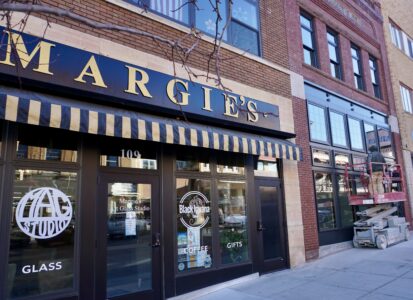
The city approved its Facade Improvement Program for downtown Minot in July 2021, emphasizing aesthetics and historic quality of the facades. Accessibility was an eligible expense, although not a requirement.
The Renaissance Zone Review Board has recommended the council require push-button doors and provide grants of $5,000 for one main entrance door. Previously approved applicants could add that accessibility to their existing applications.
Council member Carrie Evans asked that the council require power-assisted doors in the facade program but that money should come from reserves in the city's general fund rather than from the economic development portion of the sales tax.
City Finance Director David Lakefield voiced concern about the legalities of using general fund money, given restrictions on gifting public dollars. The sales tax has an economic development link to the facade program but general fund dollars do not, he explained.
A memo to the council from City Manager Harold Stewart, based on staff discussion, raised other concerns. The memo stated current building codes already address accessibility under federal law and not all buildings will be able to install push button doors due to sidewalk slopes or building design. There also was concern that retroactive installation of push button doors on completed facade projects might not be defensible as part of an economic development program.
Stewart said the existing facade program and current building codes offer a more flexible way to address accessibility.
""I don't believe our current building codes are sufficient," Evans said. "Making this optional where public money is involved, to me, is not negotiable."
Evan's proposal did provide for an exemption to address times when accessible doors are not practical or feasible.
Council member Scott Burlingame said he likes the idea of offering accessibility assistance as part of the facade program but noted power-assisted doors aren't a requirement of the federal Americans with Disabilities Act.
"I would rather focus on enforcing current laws and enforcing current regulations and really pushing that than adding to that," he said.
Mayor Tom Ross agreed that he can't support mandating beyond federal law.
"I think there's a difference when we're talking about public funds," council member Stephan Podrygula said. "We have the right to expect more out of people if they're getting taxpayer dollars."
Council member Paul Pitner said the door requirement doesn't need to be in the facade program because accessibility already is a reimbursed expense in that program.
"I think that's good enough," said Pitner, who offered that he can support development of a citywide reimbursement program for accessibility.
"The city council is being looked at to fix something that, I think, really the onus is on the business owners," council member Lisa Olson said. "If business owners want their business to be accessible to everyone, so everyone's dollars can be spent in their business, this is something that they should do."
Evans suggested the logic of businesses having the onus would preclude the city from having a facade program at all.
"This is a public program," she added. "Businesses can do as they please, but if you're going to come and ask us for money, this is going to be a string attached to that money."
Voting to table were Jantzer, Olson, Ross and Burlingame. Voting against were Pitner, Podrygula and Evans.