
Burlington marks end of project construction
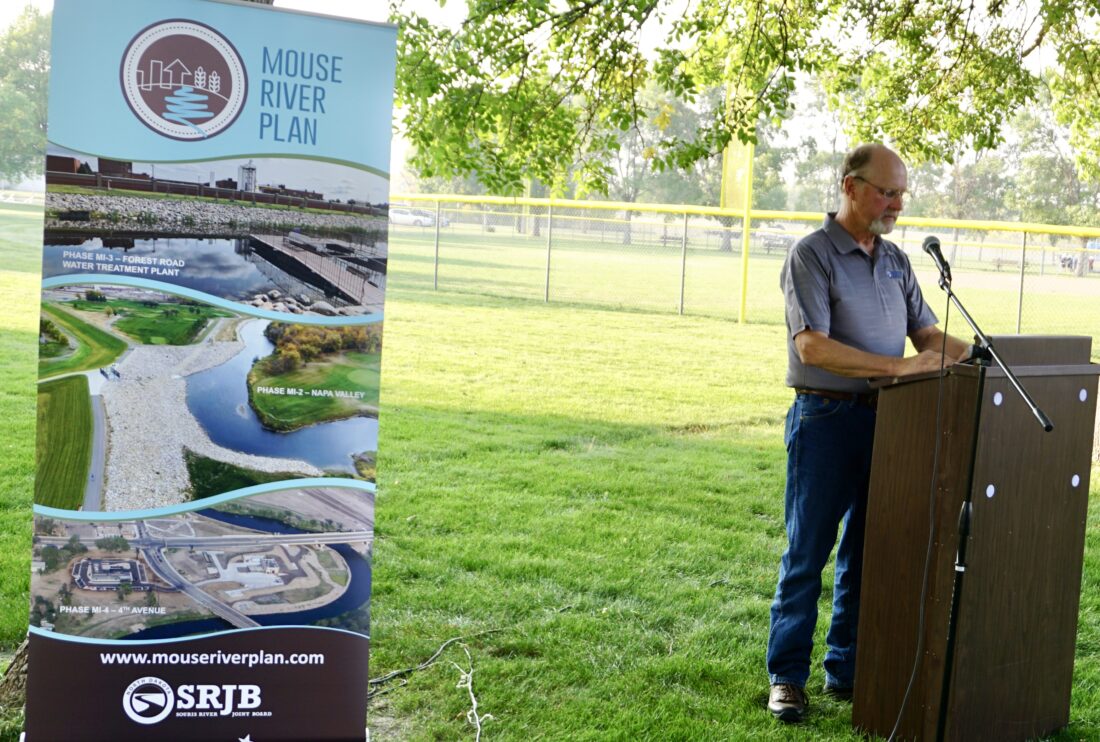
Souris River Joint Board Chairman David Ashley speaks at a ceremony to celebrate the completion of the enhanced flood protection project in Burlington Tuesday.
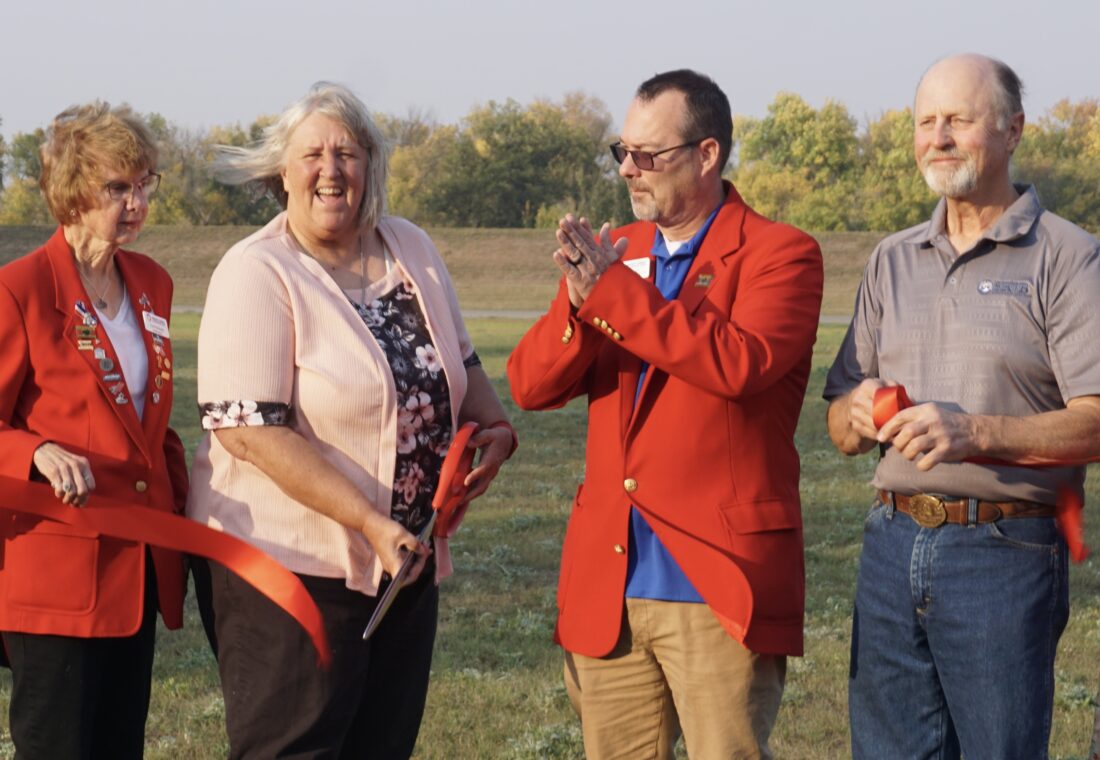
Burlington Mayor Jeanine Kabanuk shows her pleasure upon cutting the ribbon on the completion of flood protection in her community. From left are Minot Area Chamber EDC ambassador Carol Schmidt, Kabanuk, MACEDC ambassador Chad Wright and David Ashley, chairman of the Souris River Joint Board.
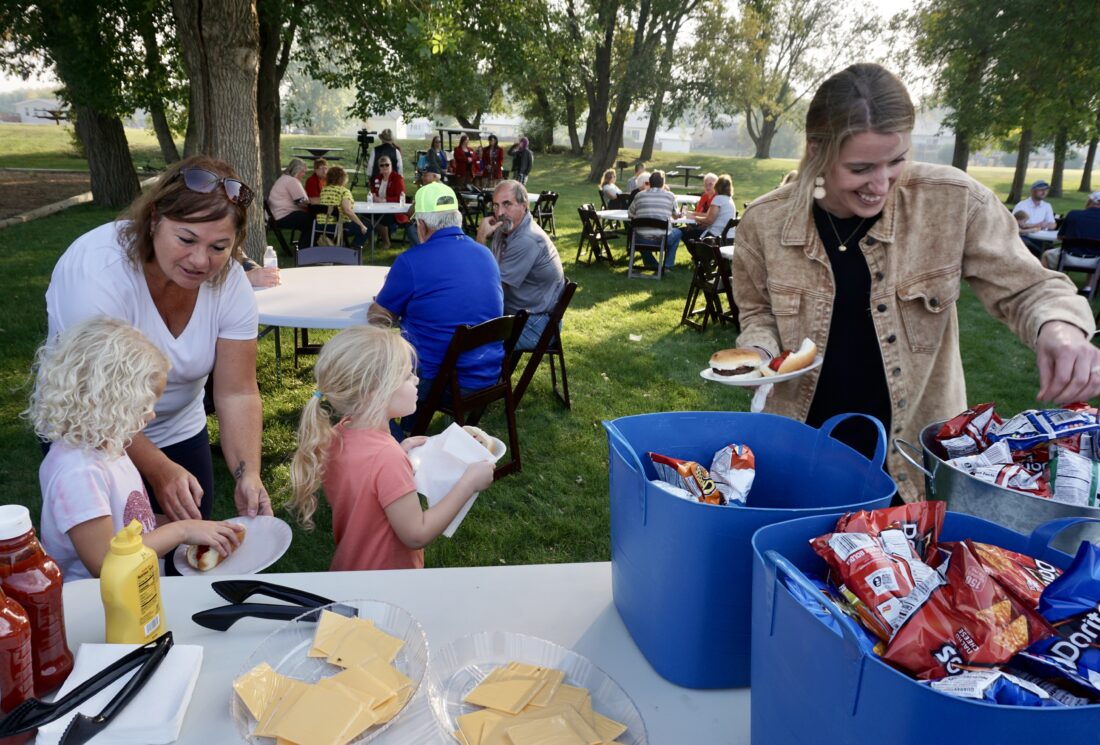
Tammy Mertz, left, assists her granddaughter Nora Weidert in the food line, as Delaney and her mother Brianna Hedges, right, also participate in the picnic held at the Burlington Sports Complex in celebration of the completion of the flood protection project Tuesday.
Souris River Joint Board Chairman David Ashley speaks at a ceremony to celebrate the completion of the enhanced flood protection project in Burlington Tuesday.
Burlington Mayor Jeanine Kabanuk shows her pleasure upon cutting the ribbon on the completion of flood protection in her community. From left are Minot Area Chamber EDC ambassador Carol Schmidt, Kabanuk, MACEDC ambassador Chad Wright and David Ashley, chairman of the Souris River Joint Board.
Tammy Mertz, left, assists her granddaughter Nora Weidert in the food line, as Delaney and her mother Brianna Hedges, right, also participate in the picnic held at the Burlington Sports Complex in celebration of the completion of the flood protection project Tuesday.
Trending
BURLINGTON - Having experienced the 2011 Souris River flood, Burlington resident Diana Roe and her family were ready to celebrate completion of enhanced flood protection at a community barbecue Tuesday.
"Hopefully, it takes care of everything," Roe said of the improved protection. "I don't want to go through it again."
Flood protection has changed the look of the community, as Doris Johansen acknowledges when describing her neighborhood after the buyouts made way for larger levees. Having experienced floods in 1969 when there were no dikes and again in 2011 when water overtopped the dikes, she also welcomes the new protection.
The 1969 floodwaters didn't reach her house, she said, "except my husband pumped water into the basement to equalize the pressure."
The $40 million Burlington portion of the Mouse River Enhanced Flood Protection Project was built to protect against a flood of the scale of the record 2011 event.
"It's taken a multitude of partners, from the federal, state, county and local level, to continue pushing this important work forward," said David Ashley, chairman of the Souris River Joint Board (SRJB).
U.S. Sen. Kevin Cramer sent remarks, and State Engineer John Paczkowski represented the state in speaking of the progress that has been made.
"The completion of this project truly is a new era for the residents of Burlington," he said. "The state has served as a cooperative partner by providing technical assistance and cost share to support just over $25 million for the City of Burlington alone."
Ryan Ackerman, administrator for the SRJB, recalled working with the City of Burlington as its engineer in 2011.
"I worked with some of the finest people I've ever met to try and protect the city from flooding," he said. "Those folks, while protecting their hometown, demonstrated leadership that it's a privilege to witness."
Burlington held back the water somewhat longer than Minot but the selfless and heroic efforts of the community weren't enough in the end, he said.
"The community will never be the same as a result," Ackerman said. "Once that water got pumped back into the river, and we had a chance to assess the damage, the task ahead seemed pretty daunting - almost impossible. The common question was, 'What are we going to do?' And that's when leaders rise to the occasion."
The city imposed a special assessment tax to complete an initial dozen acquisitions, for which the State Water Commission later reimbursed 75%. Long-time mayor Jerome Gruenberg passed the baton to new mayor Jeanine Kabanuk in 2016, who continued the hard work with the SRJB to secure funding to complete the project, Ackerman said.
Kabanuk voiced appreciation to community members who willingly endured the trials of living around construction because they understood the end goal.
Ackerman recognized the community's sacrifices, too.
"We should all appreciate the sacrifices made by those in the community - those that sold their homes for the benefit of the community. We should appreciate the patience of our neighbors during the construction of this project with the noise, the dust, the disruption and, in some cases, the temporary housing," he said.
Ashley spoke of the four phases of flood project construction, which started in 2019. The first phase was the replacing Colton Avenue Bridge. The phase included 20,000 cubic yards of dirt, 125,000 pounds of rebar, 880 cubic yards of concrete and and 9,700 tons of riprap.
Other phases included removal of trees and other vegetation, relocating parking lots and lots of coordination of utilities, Ashley said. As of this fall, the work is finished.
"We celebrate today. But tomorrow we go back to work to help residents throughout the basin," Ackerman said. "We hope that we're going to be in a position to cut that final ribbon on flood protection in the basin 2035. It's been 12 years since the flood. It'll be another 12 until we get flood protection completed. Burlington can say it now. It'll be a great day when we can all say throughout the basin, 'Rest easy. Flood control is complete.'"