
Commission wrestles with budget
Attorneys to receive mid-year pay raises
Trending
Ward County's assistant state's attorneys will get immediate salary increases as part of the county's effort to bump up pay for positions that have been hard to fill.
The change also is being factored into budgeting for 2024, which county commissioners made progress with on Thursday. They plan to meet again next Wednesday to finish adjustments and adopt a preliminary budget. The county will be sending projected tax information to property owners by Aug. 31 based on preliminary budgets of governmental entities.
The salary increases in the State's Attorney's Office follow pay hikes for correctional officers and highway personnel this summer.
Commissioners voiced some qualms about mid-year pay changes.
"We've been backed into the corner here a little bit, but I don't want this to be the way we do things. Annually, we should be able to address these things," Commission Chairman John Fjeldahl said.
Commissioner Shelly Weppler noted the departments are funding the mid-year pay increases within their budgets.
"My comfort level in doing these is because of the vacancies. They are not going over budget," she said. The $113,741 for the 17.57% pay increases for assistant state's attorneys would come from existing dollars budgeted for the office.
"The trend is a little unsettling," Commissioner Jason Olson added. "It does cause budgeting issues. I realize it's made-up for by vacancies but I'm not comfortable with the trend of mid-year major adjustments in salaries."
State's Attorney Roza Larson, who requested the salary increases, said she had hoped to hold off until next year but has found her department at a breaking point. The office has two vacancies for assistant attorneys and is struggling to retain the remaining five assistant attorneys.
Commissioner Jim Rostad said the historic inflation nationally has impacted salaries and made competition for certain positions more intense. That is a factor behind mid-year raises, along with the need to ensure the State's Attorney's office has the people it needs, he said.
"The stakes are much too high not to have qualified people," he said.
Larson said her office has handled 641 trials so far this year.
"That's a lot. It's a lot of stress and a lot of strain on everybody - physically, mentally and emotionally," she said.
On top of the mid-year changes, the proposed 2024 budget includes a step increase in the salary schedule, amounting to 2.5%, and a 3.5% cost-of-living increase for all employees. The cost of each 1% change is roughly estimated at $215,000.
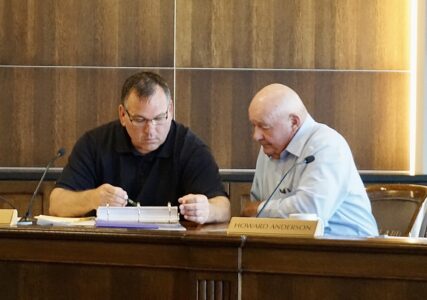
Commission Howard "Bucky" Anderson suggested keeping the step change but reducing the cost-of-living increase to .5%. The motion only received support from Fjeldahl and failed on a 2-3 vote.
The commission voted to drop a mill from the 10-mill highway levy, saving $371,330. Commissioners also directed department heads to examine their budgets to find cost savings - ideally enough savings to cover the cost of the employee step increases in their departments.
The $61.66 million proposed budget that the commission started with is 8.4% larger than this year's $56.87 million budget. Hoping to bring those spending amounts closer in line, commissioners already have whittled some money from water resources as well as the highway department.
The county will shift some sales tax dollars to highways as building projects get paid off.
In 2012, voters approved a half percent sales tax for construction of the jail expansion and county office building. The measure included money for highways, but little of the sales tax has gone that direction because collections have been needed to cover building debt. Property tax was added to those collections one year to pay the building bonds.
In 2020, voters supported extending the tax to maintain and improve roads once the tax is no longer needed for the buildings. The county expects to be paying on the buildings for a few more years.
Commissioners could decide to accelerate payment and decrease those years or stay on the existing payment schedule, which could mean some leftover money each year for roads. Commissioners indicated a willingness to consider using unspent sales tax dollars that might materialize next year to compensate for the highway mill levy reduction.