
Alcohol treatment center gets approval
Council rejects ‘not in my backyard’
Trending
Neighborhood concerns about personal safety and harm to the business community didn't sway the Minot City Council from approving a zone change for a downtown alcohol treatment center Monday.
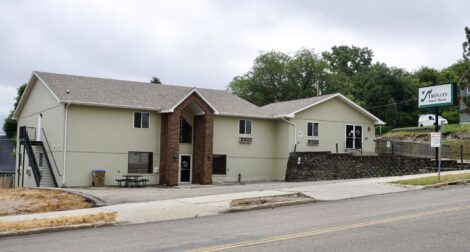
Providence House has proposed up to a 16-bed facility in the former Trinity Guest House, located at 415 Main St. S., across the street from the former hospital. The center would provide alcohol treatment services for pregnant women and women with children.
"I'd like to strongly point out that my neighbors and myself are not opposed to giving help and support to people that need it," said resident Peter Hugret. "However, we feel this proposed facility has not been thoroughly researched or thought through."
He said the zoning code only includes nursing homes and hospitals as medical designations, and neighbors disagree that treatment facilities should be defined as hospitals.
"The application for a zoning change for the Trinity Guest House, to be used as a treatment facility, was approved by the planning commission without conditions, which to me, in my way of thinking, means that more of these types of facilities could be located throughout the CBD (Central Business District) without regard as to what type of treatment facilities could be opened," Hugret said. "If this goes forward, it will deter private investment and customers in the downtown area. I think people will tend to avoid the area. and I urge the council to refer this back to the planning department for more study and maybe to look for a more suitable location, but not on the fringe of downtown."
"Downtown is going to suffer," added Judith Howard Hugret. "The city is facing a $4 million deficit next year. Where's the money going to come from if businesses downtown close?"
Jonathan Layne, representing Providence House, spoke of the positive aspects of the alcohol treatment center the organization operates at Watford City.
"It will not be an eyesore downtown. It will be amazing. The things that are coming out of it - even more amazing," he said of the Minot facility. "We don't want to be a burden to this community. We want to be a resource to this community. The stigma of addiction is horrible. People don't understand it unless you've been there."
"Why does it have to be placed right across the alley or the street from private citizens?" asked neighbor Keith Cochrane. "What he has going on here is a great idea. I'm for that. I'm just not for it in my backyard."
Other neighbors agreed, saying they would not feel safe with the proposed facility in their backyards. They raised concern about men who might come to the property and create problems or dangerous situations.
Neighbors suggested using other Trinity properties, such as opening a center at Trinity Riverside, where Trinity has a mental health clinic, or locating out of the city limits in a more peaceful, rural setting.
Layne responded downtown is an ideal location because of accessibility to other resources and bus service.
James Jamison, referring to his own disability rehabilitation, told the council that downtown resources are important.
"If it wasn't for being here downtown and being able to ride the buses and utilize the resources here downtown, I would not make it," he said.
"I respect what everybody is saying about it being in your backyard, but we already have things that are in people's backyards," he said, noting halfway houses rarely create trouble. "I don't think these people should be prejudged just because of a situation that they're going through, because of a location where it's going."
Council member Lisa Olson said she is sympathetic to neighbors' concerns. However, there always have been concerns about crime and property values when a recovery house is proposed, and those concerns don't materialize, she said.
"This location seems to be the perfect location for it to be," she said.
Scott Burlingame agreed that Minot has multiple recovery facilities in residential areas.
"Most of us, unless we're looking for it, do not know where those are, because they are just blended into our community," he said.
Asked for input, Police Chief John Klug said his department rarely receives calls to recovery facilities and typically those calls are no different than to any residential home. When the hospital emergency room was open in that location, the number of calls led the hospital to consider hiring an off-duty officer for the ER, he said.
Council member Paul Pitner said he might not want it in his backyard, but the issue before the council isn't the treatment center but a zone change that does fit with the city's ordinances and plan.
"We can't change the goalposts at this point in the game. It's not appropriate," he said.
Council member Stephan Podrygula called it a "greater community good."
"If we don't have it in someone's backyard, it's never going to be there, and we need it to be there," he said. He also asked the planning department to review the city code definitions to more clearly define different types of group homes for zoning purposes.
Residents also raised concern about reports that the Victorian house next to the guest house is to be converted into a men's homeless shelter.
John Van Dyke, principal planner for the city, said a potential buyer discussed a possible training center but not a homeless shelter. The property is zoned for residential, he said, so any plans that a buyer might have for developing the property would require city approval and public hearings.