
Council tables controversial ordinance
Long-term plan gains approval
Trending
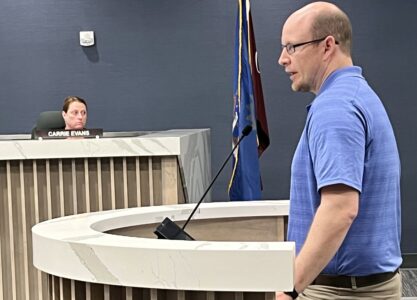
An overflow crowd who came to show support for or against a revised human relations committee ordinance failed to get the opportunity after the Minot City Council tabled the matter Monday.
The council took other significant action in approving an updated comprehensive plan for the city but put off discussing the committee ordinance due to lack of a full board. Mayor Tom Ross was unable to attend the meeting.
Council member Stephan Podrygula asked for postponement.
"I don't know if the mayor has strong feelings either way on this but I think it would only be proper," he said of tabling the ordinance a second time. "He deserves the privilege to be able to speak and vote and also listen."
The council had postponed action earlier this month because of Podrygula's absence from that meeting and a desire not to appear the ordinance was being rushed. The council did take public input at that meeting, though.
Council member Carrie Evans objected to the latest postponement, recalling the council's decision to proceed with discussion on a flag policy despite her absence. The council took up the matter after hearing concerns in the community over a flag approved on city property for the LGTBQ+ community with which she identifies.
"We learned from that experience," council member Mark Jantzer said. "We tabled this last time when Alderman Podrygula was not able to be here, and I think this motion is in order."
Much of the public opposition with the new language in the human relations committee ordinance has been due to concerns over how LGBTQ+ matters would be handled.
The Human Relations Committee was created in 1976 but has been inactive for more than a decade.
According to the proposed ordinance revision, its purpose is to "promote the acceptance and respect for diversity through educational programs and activities and to discourage all forms of discrimination based on actual or perceived race, color, religious or philosophical beliefs, sex, pregnancy or parenthood status, political beliefs or affiliation, physical appearance, intimate partner violence or sexual assault survivor status, source of income, genetic information, prior arrest or conviction record, sexual orientation, gender identity or expression, housing status, military or veteran status, national origin, age, citizenship status, mental or physical illness or disability, and marital status."
The committee's goals and objectives would be to provide leadership in areas of civil rights, educate and promote respect for diversity, identify issues of concern regarding civil rights and encourage adherence to federal and state laws regarding civil rights.
Its duties would be to make recommendations to the city council on actions and programs, consult with different groups about providing education and assisting aggrieved individuals by offering information and guidance.
A public hearing on a 2040 Comprehensive Plan drew no comments, although the public has weighed in various times through meetings and surveys during the development of the plan over the past year and a half.
Scott Harmstead, project manager with SRF Consulting in Bismarck on the plan, noted there was a particular focus on growth areas in southwest and northwest Minot and downtown, and the city's periphery and extraterritorial area also is addressed.
Harmestad said they were tasked with making future land use plans as reaaalistic as possible.
"So we think that this is a much more practical vision of what development could look like in the next 20 years," he said.
The plan will serve as a guide for future development and replaces a 2012 document.
Among features of the plan are to:
- Encourage development that revitalizes distressed/underutilized parcels.
- Promote development patterns and transportation infrastructure that support access and connectivity for all travel modes.
- Preserve and enhance existing buildings to help meet community housing needs.
- Strive for efficient and responsible energy usage and resource consumption.
- Design and program parks, open space and indoor recreation facilities for all-season use.
- Strengthen community connections to the river while protecting the community from future flood events.
- Differentiate Minot from other communities through a special focus on quality-of-life amenities, making Minot a desirable location for business development and workforce attraction.
- Improve the aesthetics of highway entry corridors, arterials and collectors.