
Ward County objects to state interference
Commission opposes opioid fund bill
Trending
Ward County commissioners have taken a stand against state legislation they feel will interfere with its decisions on how to use money from an opioid lawsuit settlement.
Ward County received about $46,962 so far from its participation in a class action lawsuit against drug companies. The City of Minot also participated and previously reported receiving $13,102 from its initial two payments.
House Bill 1447, which passed the House and received a "do pass" recommendation from the Senate Appropriations Committee Tuesday, includes language stating that any political subdivision may add those dollars to the state opioid settlement fund or "may retain the moneys and transfer the moneys to the public health unit that provides services to that political subdivision."
It would seem to say if we recover any funds and we choose to retain them, we have to then give it to our local public health unit," State's Attorney Roza Larson told the Ward County Commission Tuesday. "I don't know how they can go into our private litigation monies and do that, but that's what the bill is doing."
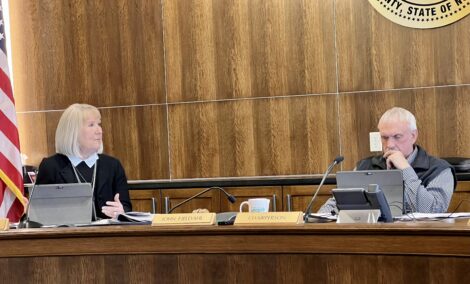
The commission responded by voting 5-0 to let legislators know of its opposition to the bill.
The bill also requires that political subdivisions "collaborate with a public health unit on the use of the moneys for local programs for remediating and abating the opioid crisis."
Commissioner Shelly Weppler said she sees the county taking that action regardless of the legislation.
"I would really look for a program to help our addicts that end up in our jail," she said. "I almost feel like we would reach out to First District Health to help us run that program."
"I don't like this because it's basically telling us what we're going to do," Commission Chairman John Fjeldahl said. "When we decided we wanted to participate in this, it was our choice."
HB 1447 states that counties that retain the settlement money and work with their health units must report annually to the Department of Health and Human Services with details regarding the spending of the money.
The bill also requires political subdivisions to comply with court-ordered restrictions on how the money can be spent. The court settlement impacting Ward County directs money to be spent on prevention, remediation, treatment and other concerns related to opioid addiction.
Weppler proposed setting up a task force to look into allocating the county's settlement dollars. However, there was concern that doing so would be premature until the Legislature makes a decision on HB 1447, resulting in Weppler's motion failing 2-3.
In addition to its requirements for political subdivisions, language in HB 1447 addresses creation of an opioid settlement fund with an advisory committee and outlines the use of the funds in preventing, treating and abating opioid use. It also addresses management of the fund by the state investment board and provides $8 million to the Department of Health and Human Services for an opioid treatment and prevention program.