
OUTDOOR CONNECTIONS: Chasing late-season mallards requires persistence
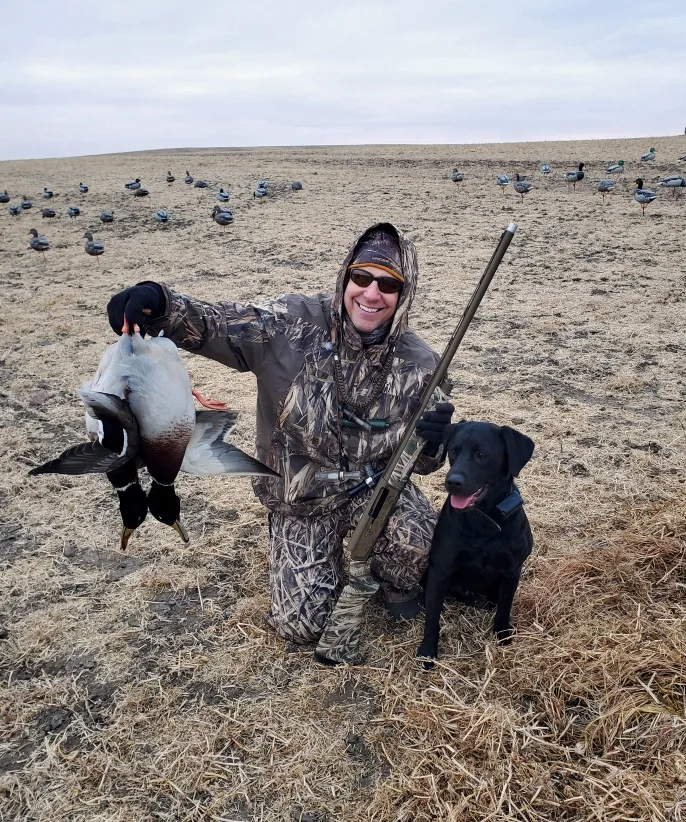
Submitted Photo Jim Carroll displays a pair of drake mallards alongside his black Lab, with a spread of decoys strategically arranged in a harvested cornfield behind them. Photo provided by Jim Carroll.
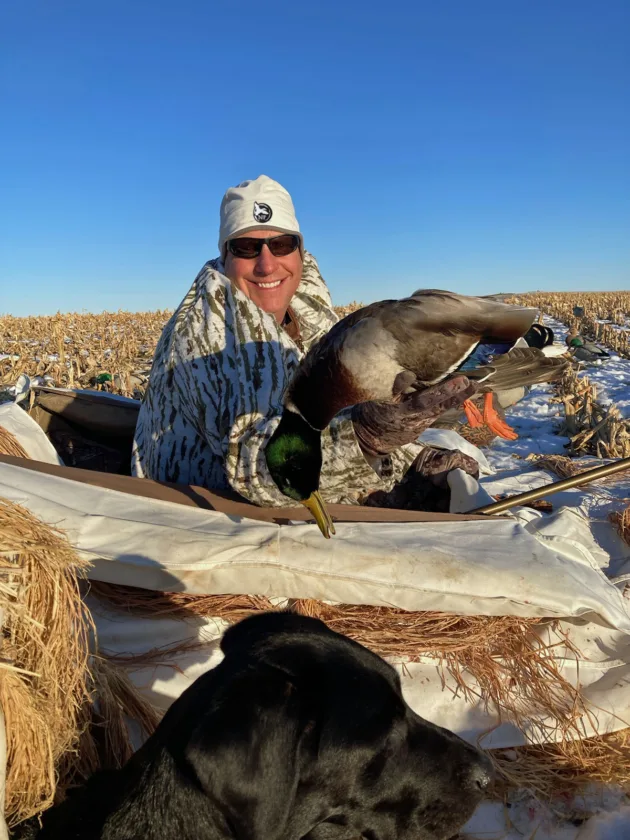
Submitted Photo Jim Carroll poses in his hunting blind with a beautiful drake mallard and his black Lab, companions in the late-season hunt. Photo provided by Jim Carroll.

Gary Korsgaden
Submitted Photo Jim Carroll displays a pair of drake mallards alongside his black Lab, with a spread of decoys strategically arranged in a harvested cornfield behind them. Photo provided by Jim Carroll.
Submitted Photo Jim Carroll poses in his hunting blind with a beautiful drake mallard and his black Lab, companions in the late-season hunt. Photo provided by Jim Carroll.
Gary Korsgaden
Trending
The wind wails across the open prairie. Wetlands are frozen, snow covers the fields, and the potholes have gone quiet. A hunter can drive for hours without seeing a duck.
For most hunters, that’s reason enough to call it a season. For Jim Carroll of Minot, the roughest days of duck season also bring some of the most rewarding hunting of the year. “Late-season duck hunting is some of the best - and most challenging - there is,” Carroll said.
Success takes patience, persistence, and a sense that the prairie might deliver one more surprise.
As autumn gives way to winter, the wetlands freeze, and mallards leave the shallow potholes, concentrating wherever open water remains.
Hunters must adjust, too.
The search leads to deeper lakes and major waterways, including the Missouri River, Lake Audubon, and Lake Sakakawea.
Scouting comes first; for Carroll, successful late-season duck hunting begins long before the shotgun is loaded. He spends hours on back roads, watching fields and open water to locate roosting and feeding ducks.
“You might drive 200 miles in a day and not see a bird,” Carroll said.
Finding ducks is only part of the work. Hunters need permission and the right field. Late-season mallards have seen countless decoys, heard every call, and survived weeks of hunting pressure.
Carroll has watched thousands of mallards pass overhead, glance at his decoys, and continue to destinations of their own choosing.
The lesson? Don’t try to convince ducks to land somewhere they don’t want to be.
Instead, Carroll relies on plenty of decoys, careful concealment, and positioning himself where the birds are already comfortable landing.
A hard freeze may push ducks toward deeper water, while a change in wind direction can move birds to an entirely different part of the countryside. A warm spell can make their movements unpredictable, and a major snowstorm may be just the push needed to get migrating birds moving south.
Carroll keeps a close eye on the forecast, especially when storms give way to clearing skies and northwest winds - conditions that can put birds on the move. He watches for high-flying Vs heading south, a sign that new mallards may be entering the area.
The prairie potholes around the Coteau Ridge offer migrating ducks a stopover in any remaining open water. Hunters with decoys set in nearby fields may get a brief opportunity - but another cold snap can freeze the water and send the birds on.
In late-season duck hunting, timing is everything.
If there’s one hunt that captures the spirit of late-season water fowling, Carroll remembers it vividly.
He and his friend Dave headed out with temperatures hovering around 17 degrees. A strong northwest wind swept across the prairie, and fresh snow covered the ground.
Carroll hoped mallards would leave their big-water roost early enough to reach a familiar field. Their previous flights had been late, but the field showed signs of earlier activity.
The plan was to set decoys where they’d last seen ducks, settle into their blinds, and wait. Sometimes persistence is all you have.
Sunset came and went. The sky stayed empty - no ducks, no wings, no sign the birds were coming. After legal shooting time ended, the hunters packed up. As they headed back, Carroll heard wings overhead.
Mallards appeared against the darkening sky, circled, and spiraled down toward the cornfield - the sight they’d waited hours to see.
At last, Carroll and Dave saw what they'd hoped for - a fitting end to the hunt.
It's about more than the limit. For hunters like Carroll, late-season water fowling has never been just about the number of birds in the bag.
It’s the challenge of finding ducks, the satisfaction of a good plan, and the anticipation of new birds.
Some days, the prairie gives you nothing. Other days, it offers a moment you’ll remember for years.
And sometimes, when the gear is packed and hope has all but disappeared, the sound of wings overhead reminds you why you stayed.
That’s persistence on the prairie.
Gary Korsgaden is an outdoors writer from northern Minnesota. A native of North Dakota, he's spent more than 60 years fishing, hunting and enjoying the outdoors.