
North Dakota Outdoors: Shed hunting brings about concerns
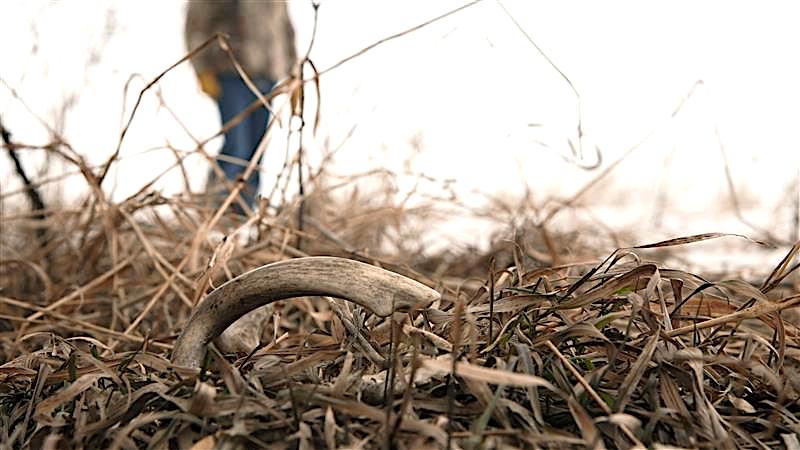
Submitted Photo Like many outdoor activities, shed hunting has changed. Photo from NDGF.
Shed hunting has become one of those late winter and early spring activities that barely existed on the radar a couple decades ago, at least not at the level we see today. At its core, shed hunting is pretty simple. Deer, elk and moose drop their antlers this time of year, and people head outdoors to see if they can find them. Those antlers might end up as decorations, knife handles, craft projects, or just a reminder of a good day spent outside.
And there’s no denying that getting outdoors after a long North Dakota winter is good for the soul. Fresh air, a little walking, and the excitement of spotting an antler tucked into the grass can make a gray winter day feel a lot shorter.
But like a lot of outdoor activities, shed hunting has changed.
What used to be a casual late March or early April pastime has, in many cases, turned into a full-blown winter pursuit. Increasingly, people are heading out in December, January and February, right in the heart of winter. That’s where concerns start to pile up.
Winter is the most stressful time of year for wildlife. Deer, pheasants and other animals are just trying to survive. Their food is limited, temperatures can be brutal, and every time they’re forced to move, they burn precious energy. When people repeatedly walk through food plots, shelterbelts, wetlands and other wintering areas looking for sheds, animals are displaced again and again. One disturbance doesn’t seem like much, but day after day it adds up.
On many Game and Fish Department wildlife management areas, a lot of planning goes into providing good winter habitat. Thermal cover, shelter from wind, and nearby food sources are intentionally placed close together to minimize how far animals have to travel. Those areas can hold large numbers of deer during winter, sometimes hundreds at a time. They’re also open for public use, which is something we value. We want people out enjoying these areas. But we also must recognize when use becomes pressure.
Shed hunting has grown in popularity nationwide. There are magazines, websites, social media pages, even dogs trained specifically to find antlers. In Western states, where big game animals migrate and concentrate on defined winter ranges, shed hunting has become such an issue that some states restrict it until April or require permits. North Dakota doesn’t have classic winter ranges, but depending on snow, weather and food availability, we can still see heavy concentrations of wildlife on both public and private land.
We’ve already seen situations where repeated shed hunting activity starting in early January pushed deer completely off wildlife management areas. Those deer didn’t disappear. They moved onto neighboring private land, sometimes creating new problems for landowners.
Closing wintering areas entirely has been discussed, but that opens another set of issues. Coyote hunters, snowshoers, trappers and other users also rely on public land. Rather than shutting people out, the goal is education and common sense.
Be ethical and responsible. Avoid areas with high concentrations of wintering wildlife. Consider waiting until late March or early April to start looking for sheds. Limit how often you’re walking the same areas. Give animals a break when they need it most.
This isn’t just about deer. Pheasants, for example, also rely on winter cover and need to minimize the time they spend exposed to cold and predators. Repeatedly flushing birds during winter forces them to burn energy they can’t afford to lose.
Shed hunting can still be a fun family activity and a great excuse to get outside. It doesn’t have to be a competition or a race to beat someone else to a spot. Wildlife management areas are open year-round, and we want them used – but used wisely.
A little patience now can go a long way toward helping wildlife come through a North Dakota winter in the best shape possible for spring and the next breeding season.
Outdoors
North Dakota Outdoors: Shed hunting brings about concerns

North Dakota Outdoors: ND outdoors’ goals ensures programs for generations
North Dakota Outdoors: Program’s goal is safe hunters
Tentative 2026 season opening dates
The North Dakota Game and Fish Department annually provides its best estimate for opening dates to help hunters ...
Contest entry deadline nears
The North Dakota Game and Fish Department’s annual Earth Day Patch Contest is an effort to heighten awareness ...
Lake Sakakawea campground reservations open
RIVERDALE – Campground reservations for Lake Sakakawea in North Dakota are now being accepted for the upcoming ...