
Prairie Fare: What you plant this spring can support eye health
Carrots, sweet potatoes, winter squash are rich in carotenoids; other vegetables may help reduce risk of macular degeneration

Submitted Photo Soon, common garden vegetables can fuel our eyes and the rest of our bodies. (NDSU Extension)
Our two dogs zipped around the yard, noses to the ground, celebrating the warmer temperatures and nearly snow-free backyard. A pair of cardinals sang loudly from the trees as if they were celebrating, too.
My dachshunds’ bellies are fairly close to the ground — a little too close to the snow for their comfort. They usually scamper back into the house as soon as they can.
As I wandered behind my dogs, I thought I saw a glimpse of green living spears. Unfortunately, pine needles from the dogs’ explorations under our trees were clinging to their fur and dropping onto the ground.
Then it snowed again the next day, and all our neighbors were outside clearing sidewalks and driveways.
After months of white snow and brownish-gray tree bark, I’m longing to see budding trees and green grass. I want to grow some vegetables and flowers in my backyard and at a community garden.
Soon, we can plant gardens that are feasts for our eyes and the rest of our bodies. Many garden vegetables also provide nutrients that support eye health. Although we may have learned that carrots are good for our eyes, some vegetables are even better.
Carrots, sweet potatoes and winter squash are rich in carotenoids, which our body converts to vitamin A. These foods nourish your eyes and help them adjust to low light, sometimes called “night blindness.”
Other vegetables that grow well in our gardens may help reduce the risk of macular degeneration, a leading cause of vision loss.
The macula, sometimes called the “yellow spot,” is a small area in the eye about the size of a capital “O.” Despite its size, it plays an important role in clear vision.
The macula contains two pigments — lutein and zeaxanthin — that we obtain from foods. Dark leafy greens such as spinach, kale and romaine are rich sources. Corn, eggs, bell peppers and colorful fruits such as tangerines also provide these eye-healthy nutrients.
Enjoy the color of nature and put more nature on your plate. Some eye health supplements are available, but be sure to visit with your health care provider before taking any.
Try growing some eye-healthy foods this summer. Leafy greens sprout quickly, and the seeds can be planted as soon as the soil temperature reaches about 50 degrees Fahrenheit.
I always enjoy growing loose-leaf lettuce because it is ready in 40 to 50 days. See “From Garden to Table: Leafy Greens!” online from North Dakota State University Extension to learn more about the varieties of leafy greens we can grow.
Food can be considered preventive medicine because our bodies need a full range of nutrients to function. The National Eye Institute provides a variety of information about eye health.
— See an eye-care professional routinely. Age-related macular degeneration, cataracts, diabetic retinopathy and glaucoma can be detected through regular eye exams.
— If you smoke, take steps to quit.
— Stay physically active to reduce risk for diabetes, high blood pressure and other conditions that can affect your eyes.
— Maintain normal blood pressure.
— Wear sunglasses and a brimmed hat when you are outside in bright sunshine.
— Wear safety eyewear when you are working around your house or playing sports.
I’ll keep watching for signs of spring with my dogs leading the search. Until the garden begins to grow, I’ll add some colorful foods to my plate and enjoy the promise of the season ahead. This recipe has a variety of eye-healthy nutrients.
Spinach-stuffed Potatoes
1 (10-ounce) package frozen spinach, thawed and drained
6 medium potatoes (russet or sweet potatoes)
1/4 cup green onion
1/3 cup red bell pepper
1/4 cup plain Greek yogurt
1/4 cup silken (soft) tofu
1/2 cup low-fat cheddar cheese, grated
1/4 teaspoon ground black pepper
½ teaspoon salt (optional)
Thaw the spinach and drain any extra water. Preheat the oven to 350 F. Wash and scrub the potatoes, then bake for 1 hour, or until tender and easily pierced with a fork. While the potatoes bake, wash and chop the green onion and bell pepper. In a mixing bowl, combine the yogurt, tofu, spinach, onion, bell pepper and cheese. When the potatoes are done, let them cool, then scoop out the insides with a spoon. Add the potato flesh to the yogurt mixture and stir until well combined. Spoon the filling back into the potato shells, sprinkle with seasoning and bake for 20-25 minutes, or until slightly browned. Add extra cheese on top, if desired.
Makes six servings. One serving has 345 calories, 2 grams (g) fat, 16 g protein, 68 g carbohydrate, 9 g fiber and 423 milligrams sodium.
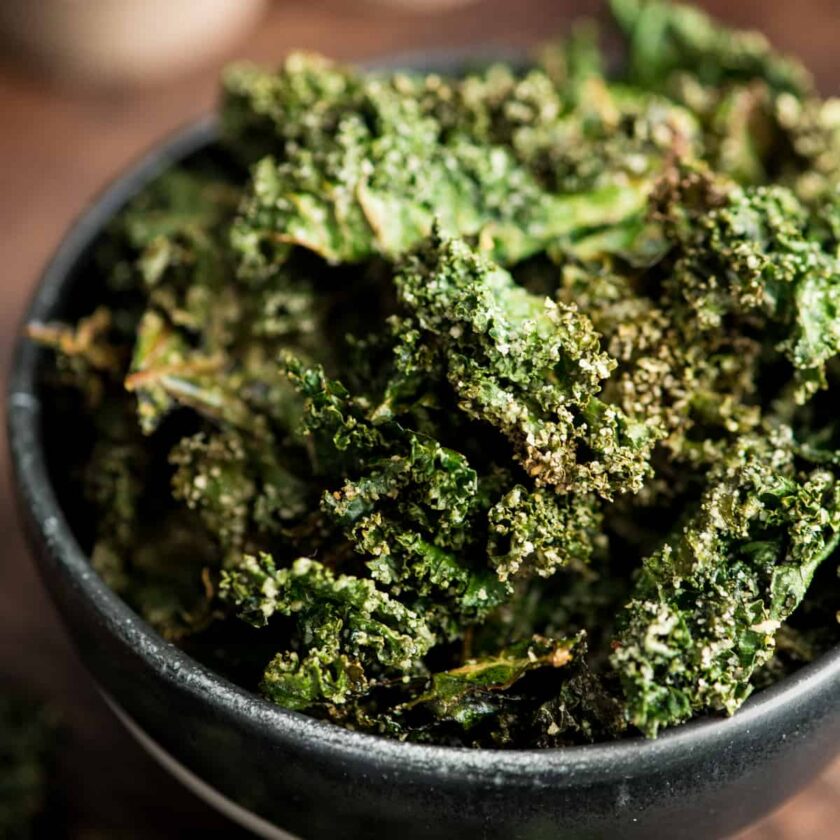
Bake Kale Chips
Baked Kale Chips
1 bunch kale
2 tsp. olive oil (approximately)
Preheat the oven to 200 F. Lightly spray two large baking sheets with vegetable oil cooking spray. Wash and thoroughly dry the kale. A salad spinner works well, followed by patting the kale dry with paper towels or a dish towel. Cut with kitchen shears or tear leaves from stems and thick center rib in middle of leaves, then tear into large sections. Toss with 1 teaspoon oil in a large bowl. You may wish to use your fingers to distribute the oil on the leaves. Use slightly more oil if needed.
Place in a single layer on baking sheets; use separate oven shelves if needed. Bake about 20 minutes. Then remove the baking sheets from the oven, turn kale chips over and switch shelves if the pans were placed on separate shelves. Check after an additional 10 minutes to determine if they are evenly crisp. Continue baking if needed. The time may vary with your oven. For future reference, record the time that works for you. Let chips cool slightly on a baking sheet placed on a cooling rack. Finally, transfer to a bowl and sprinkle lightly with salt, grated Parmesan cheese or your favorite spice if desired.
A nutritional analysis of kale chips is not readily available, but 1 c. of chopped kale has about 35 calories, 1.3 grams (g) fiber and 7 g carbohydrate. The sodium value in your chips will vary depending on your choice of seasonings.
(Julie Garden-Robinson, Ph.D., R.D., L.R.D., is a North Dakota State University Extension food and nutrition specialist and professor in the Department of Health, Nutrition and Exercise Sciences.)
Home and Garden
Dakota Gardener: Exceptions to the rule

Prairie Fare: What you plant this spring can support eye health

Prairie Fare: Sweet truths — What to know about artificial sweeteners

Dakota Gardener: Friends don’t let friends prune alone

Dakota Gardener: Don’t let Mother Nature fool you
