
Fort preserves history of Upper Missouri fur trade
Trending
WILLISTON – Established in 1828 by the American Fur Company, John Jacob Astor, Fort Union served as a center during the fur trade for decades, according to the National Park Service.
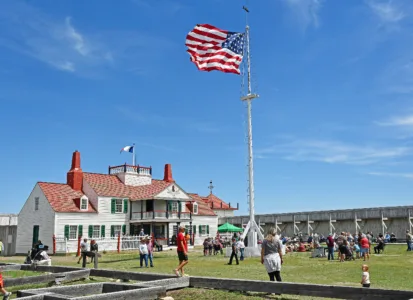
Fort Union Trading Post National Historic Site is located 25 miles southwest of Williston, next to where the Missouri River meets the Yellowstone rivers.
On June 20, the 60th anniversary celebration of the Fort Union Trading Post as a national historic site, was celebrated at the fort.
Speakers at the event included: Philip McCall, chief of Facility Management, Theodore Roosevelt National Park and Park Operations manager (assisting), Fort Union Trading Post NHS; Megan Halvorson, executive director, Fort Union Association; Rick Collin, a historian, now retired and living in Bismarck, who was active in the efforts to restore Fort Union in the 1980s, serving as chairman of the Friends of Fort Union from 1985-86 and member of the Fort Buford 6th Infantry Regimental Association from 1985-86, who read comments from Tom Rolfstad, past vice president of Friends of Fort Union; and Greg Hennessey, current chairman of Friends of Fort Union; Dave Finders, long-time member and past president of Fort Union Muzzleloaders Association; Loren Yellowbird, former interpretive ranger at Fort Union Trading Post NHS; Paul Bauer, long-time member of Fort Union Muzzleloaders Association and former board member of Fort Union Association; Wendy Johnson, former president of Fort Union Association,who sent a video greeting; Becky Kallevig, participant in 1972 Fort Union archaeological excavations, who sent written comments read by Lisa Sanden, former interpretive ranger at Fort Union Trading Post NHS; Andy Banta, former superintendent of Fort Union Association, who sent written comments read by Kristin Norgaard, seasonal interpretive ranger at Fort Union Trading Post NHS. The event was emceed by Emilee Franklin, acting supervisory park ranger, Interpretation, Fort Union Trading Post NHS.
According to National Park Service information, Fort Union was privately owned and was built to meet the needs and wishes of the Assiniboine people. Many North Plain tribes and later Euro-Americans used the area as a meeting ground for trading buffalo robes and other furs for manufactured goods like cloth, beads, firearms and cookware. The trade lasted until 1867, remaining a peaceful and productive environment that contributed to its longevity as the longest-lasting fur trade post in the western United States region.
Fort Union remained crucial, becoming the longest-lasting fur trade post on the upper Missouri River from 1828-1867. The post introduced new materials, technology and supplies to the people along the river. The fort additionally drew artists to the site. Their art later helped historians understand the history of the place and restoration efforts.
The trade lasted until 1867 when the U.S. Army purchased Fort Union and dismantled much of it. The changes were pushed as nearby Fort Buford needed materials for its construction. Throughout the 1860s, tensions and conflict from increased settlement, along with military expansion, reduced the importance of the fur trade.
More than a century later, efforts led by local residents, historians and archaeologists aided in preserving Fort Union's history through reconstruction in the 1980s. The reconstruction can be seen today as archaeologists and historians worked to restore the fur trade site in remembrance of the people, culture and business that once stood and contributed to American history, according to the National Park Service.
Each year the historic site of the Fort Union Rendezvous hosts a 19th century fur trade fair with period art, crafts, music and history. The rendezvous held this past June was the 43rd annual event.