
A Second Look: Churches built, elections attempted
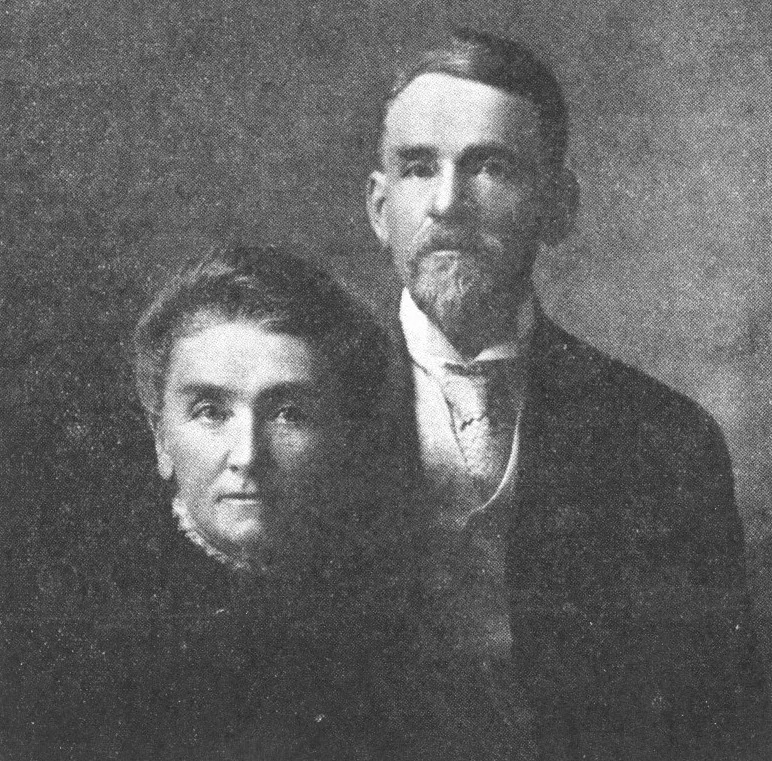
Submitted Photo The Rev. and Mrs. T.S. Reishus ministered in Mouse River Country from 1886-1894.
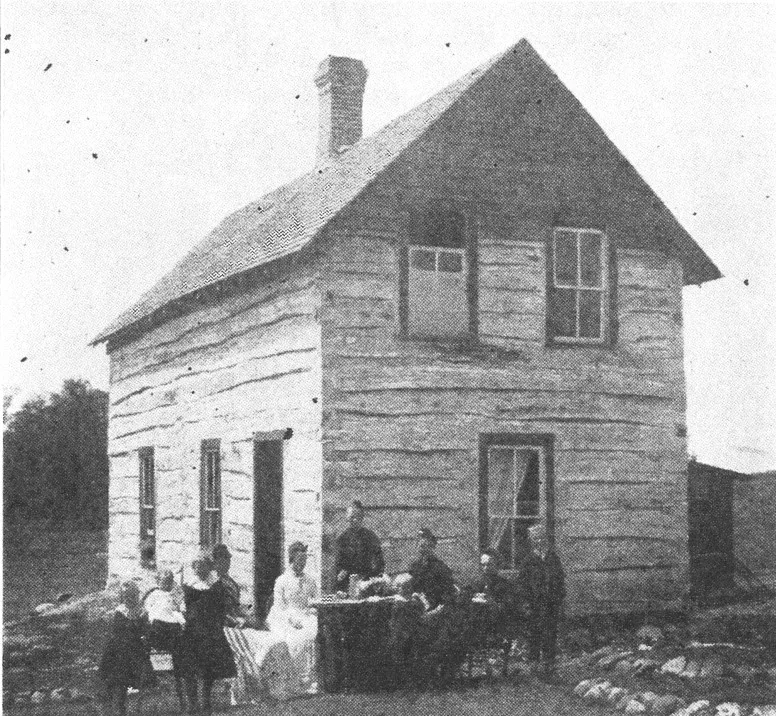
Submitted Photo A picnic is held outside the parsonage of the Mouse River Lutheran Church.
M.L. Berg
Submitted Photo The Rev. and Mrs. T.S. Reishus ministered in Mouse River Country from 1886-1894.
Submitted Photo A picnic is held outside the parsonage of the Mouse River Lutheran Church.
M.L. Berg
Trending
Editor's Note: This column is a continuation of the Tuesday, Sept. 8, column.
It was not until 1895 that a parsonage was built beside the Mouse River Lutheran Church. (The details of Rev. Torjus Reishus's activities in the Mouse River Country can be found in the English translation of his diary from Sunday, June 20, 1886, through Monday, October 18, 1886; it is printed on pages 37 to 68 of the publication The Builders: Chapters of History of the Pioneer Lutheran Church at Minot, North Dakota [Minot, 1934?]. Martha Reishus both compiled this publication and translated the reverend's diary from Norwegian into English. She was the daughter of Gunder Reishus, who was the reverend's younger brother. The Reishus parsonage appears in a photograph at the end of Builders under the caption "Original First Lutheran Parsonage.")
For the most part, Rev. Reishus held services in the homes of Lutheran settlers who need not have been at one of Rev. Aaberg's preaching places, but were scattered far and wide over the prairie. One of these distant homesteads belonged to Ole and Thure (or Thuri) Helgeson. They were born in Norway and settled in Ward County in 1887, on a farm two miles south of Minot. Their daughter Ingeborg remembered that Rev. Reishus had held services in their home. She further recalled, "He also held many services in sod shacks that had been vacated." (Ingeborg's recollections are available on Microfilm Reel Number 30 in the Ward County Pioneers portion of the Historical Data Project Biography files of the Works Project Administration held at the North Dakota State Historical Society.)
Two church buildings were erected in the Mouse River Country before Rev. Reishus moved away at the end of 1894. The first was a log church built in Villard. It was ready to be dedicated in September, 1886. A service to dedicate this church, the Norway Lutheran Church, was scheduled for Sunday, September 26. But rumors of a prairie fire in the vicinity upset these plans. As a result, Rev. Reishus shortened his remarks and
postponed the dedication of the "church yard" as he referred to it.
Just two days earlier, on Friday, September 24, Rev. Reishus and "a small army" of men and women, assisted by a "Railroad crew," had had to battle a rapidly spreading prairie fire for several hours that afternoon. (See pages 61 and 62 in The Builders.)
This Norway Lutheran log church at Villard was used from the fall of 1886 until June,1890, by which time it had become too small to accommodate a growing membership.
The second church building, made of brick, appeared in Minot in 1892, on the same site occupied by today's First Lutheran Church. The bricks were made by Hiram Van Wagoner, who later served as Minot's sixth mayor (from April, 1897 to April, 1898).
Rev. Reishus was a farmer as well as a minister. Unfortunately, the late 1880s and most of the 1890s were drought years. Perhaps for this reason, Rev. Reishus tried to supplement his income by offering himself as a candidate for Ward County Superintendent of Schools in the fall of 1886, scarcely two or three months after he had settled in Nedrose Township.
Another candidate for that office was Bert Griffith. Hardly anything else is known about him other than that he and Nels Oslund were the original owners of the lot on east Main Street in Minot upon which Postmaster Patrick McNamara's one-and-a-half-story post office was built. The result of the voting was decidedly one-sided. Griffith secured 151 votes, while Reishus only got 50 votes. Perhaps Reishus had been led to believe that there would be a large Scandinavian turnout in his favor. (The number of votes is given on page thirteen of the Thursday, May 29, 1930, issue of the Minot Daily News and Daily Optic Reporter.)
Four years later, Rev. Reishus took an even bigger step and became a candidate for a seat in the North Dakota State Legislature, as state senator from District 29 covering both Ward and McLean Counties. Erik Ramstad was his campaign manager, it seems, and Ramstad probably encouraged him to run because of some (political?) issues Ramstad was having with James Johnson, who was the other candidate for that seat.
Another person who campaigned for Reishus was Paul Havrevold, who, by then, had a reputation for shady conduct, going back to activities he had previously been engaged in in Devils Lake, perhaps as early as 1883. Editor Richard Copeland considered Havrevold "one of the most disreputable characters that ever infested a respectable community."
Havrevold and Ramstad were in McLean County seeking votes for Reishus in late September and early October, 1890. (For Copeland's comments on Havrevold, see the front pages of the Washburn Leader for both Saturday, October 4, and Saturday, October 11, 1890; for Havrevold's activities around Devils Lake, see the front pages of the Devils Lake Inter-Ocean newspaper for both Saturday, October 16, and Saturday, October 30, 1886.)
As the campaign wore on, bribes were being offered openly for people to vote for Torjus Reishus. Twenty dollars for a vote was the going price, with money ostensibly coming from the Bank of Minot and Elisha Mears. On another occasion, a farmer whose mortgage was held by the Bank of Minot was told that, if he voted for Reishus, the bank would never foreclose on his mortgage. (See the front pages of the Villard Leader for Saturday, October 11, and for November 1, 1890, for these reports of bribery.)
Reishus himself visited McLean County late in October, 1890, to see how his campaign was going. To his chagrin, he realized he had few voters he could count on. Copeland surmised that Reishus "quietly withdrew to a secluded retreat and remained out of sight. Mr. Reishus had the appearance of a greatly disgusted man, and we really believe he is sorry now that he allowed himself to be 'worked' by such a gang of nonentities."
(See the first page of the Washburn Leader for Saturday, October 25, 1890.)
To be continued. ...
M.L. Berg of Minot enjoys researching local history.