
Trending
Shakespeare opened one of his plays with, "To be or not to be. That is the question." Hamlet then debates whether life was worth living or not. Earthly existence brings each of us slings and arrows to face, overcome or accept if we must. I frequently reflect on Father Time's arrow. He used to be a distant figure. Things change. He and his quiver stare back at me in the mirror each morning now.
The newest addition to our family, Ruby Eloise, arrived eight weeks ago. Later, swaddled and resting on Rita's lap, Ruby's hairline drew her Grandma's attention. "I think we should call you 'Jordinya,'" Rita proclaimed. "Look," she went on, "look how her hairline here near her temple is like her dad's. She's just like Jordan... a little 'Jordinya.'"
The study of genetics pioneered by Watson & Crick in the early 1950s led to a better understanding of how various factors can be passed along to offspring. Their work clarified the physical structure of DNA as a double helix - two strands of nitrogenous bases spiraling around each other building the genes for each of our unique physical appearances ... as well as other elements we might wish they didn't include. Ruby's dad had more influence on her hairline than her mother did.
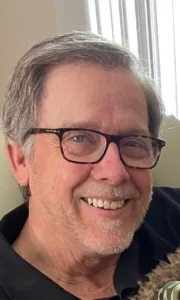
The Jordinya encounter reminded me of when my grandmother commented about my hairline around age six. "Your widow's peak is very becoming and special," she told me. I asked what she was talking about. Seventy years later, I think of Grandmother when combing my hair in the mirror. I'm sure the genetics for the widow's peak were donated by my mother's side of the family, since my dad's hairline mimicked his father's - with a forehead that eventually met up with hair somewhere in the middle of his back.
DNA passed along from our ancestors influences many things--like eye color, hair color, height, facial appearance and more. Now, we also know that genetics can transfer a variety of troublesome elements -- including blood pressure issues, diabetes, cancer or unwelcome illnesses. The grandfather who blessed me with his widow's peak eventually developed diminished hand and leg strength in his 80s. A wheelchair became his primary mode of transportation.
Likewise, my mother encountered similar problems as she advanced in years ... elements now suspected to have been passed down to her, then further on to me. Although Mother could maneuver within her home using a walker, an electric scooter provided help needed for longer outings. DNA sequencing tests have revealed my genetic irregularities. But science has yet to find a remedy for any unwanted inheritance.
Fortunately for me, in addition to sharing becoming hairline genetics, Granddad also shared cribbage lessons. Arriving for visits in Nebraska during the 1950s, '60s and '70s, the card table was promptly set up to enable the Lancaster County Cribbage Championship to get underway. If I didn't count points scored correctly during a game, Granddad would often say, "I'd state my reputation as a guesser, you can find more points than that in your hand." We played cribbage during many decades before he began dealing cards to his winged friends above.
There is no doubt the earthly time we enjoy will expire eventually. Until then, we can each do well by appreciating the joys life has to offer while accepting the slings and arrows of family drama, medical dilemmas or other assorted unpleasantries. Rather than "taking arms against a sea of troubles" as Hamlet speculated, we can heed advice Granddad also shared with me from time to time. He often "stated his reputation as a guesser" that... "It's not the hand you're dealt that matters. It's how you play your cards that counts."
Sommers is a retired Minot orthodontist, violinist with the Minot Symphony and author of the book, "Retirement? You Can't HANDLE the Truth!"