
Zoo News: Conservation involves all of us taking extra steps
Trending
Conservation is much more than just a part of the mission at the Roosevelt Park Zoo. It is an opportunity. It's an opportunity for staff to get involved and work with other zoo professionals or to work with regular people within our community with shared beliefs. We look at conservation on a local, national, and even international plane to see where we can make a difference. And we look to engage our guests to educate them and make them aware of how even the slightest gestures can make a monumental difference when it is multiplied by others doing the same.
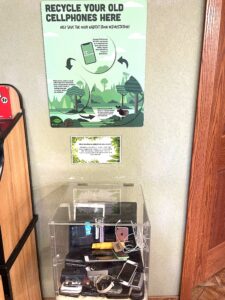
Before guests enter the zoo, they have already passed by three examples of the zoo's conservation efforts and opportunities for them to participate. On the left as you enter is our cellphone recycling receptacle. Here we accept old cellphones and other small electronics that we send off to a company that extracts the rare earth metals. The more metals we can reuse, the less that needs to be mined. The Congo in Africa is an area that unfortunately has such metals and the mines to retrieve it are destroying the forests that are home to many species including the okapi. The zoo makes annual contributions from its Conservation Fund to help protect spaces like the Congo and by doing our own small part hope to make a big difference for Akili, our male okapi, at the zoo and his wild relatives.
To your right is our battery recycling station. We offer this not so much for the purpose of recycling but it is an important component to keep as many as possible from ending up in landfills. Above the recycling containers built into the counter is a new dart frog exhibit. These and other frogs and amphibians that are in the wild face danger from items like batteries in the landfills leaching into the water supply and impacting the habitats they rely on for survival. Again, the difference we are making might be small, but if others join us in the effort, it will continue to grow.
And your third interaction with part of the zoo's conservation efforts can be found as you are browsing through the gift shop. The zoo tries to purchase items for the shop that are either manufactured in a sustainable way or from companies that contribute a portion of their revenues to support conservation efforts. Nearly 70% of our inventory falls into one of these categories and information can often be found on the tag of the item.
All this before you even pass through the doorway into the zoo's campus. Once on the campus, nearly everything you see is somehow tied to a conservation effort or program. The zoo does not have the resources to solve the ecological problems that face us all, nor does it have to. We can do our part, and if you can do your part and others do their part, one small gesture can be magnified to help make that difference.