Always stop and smell the roses
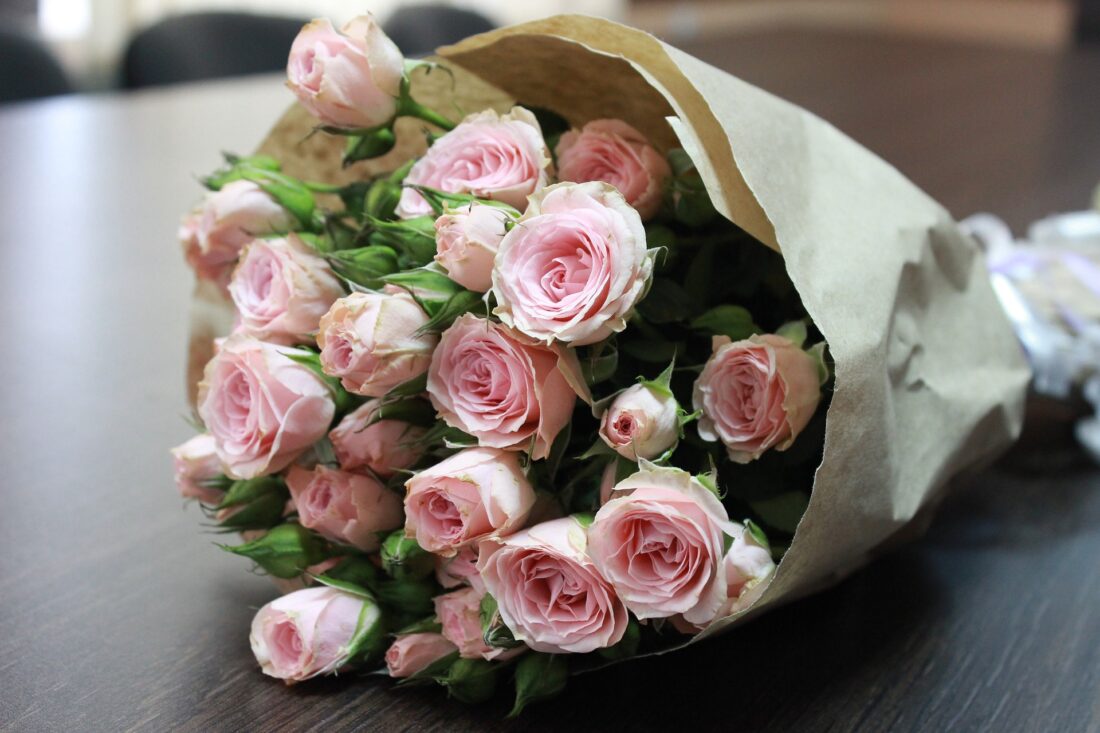
Roses have always marked big events in my life, everything from dance recitals to college milestones, but mostly I remember roses as the flower that my mother grew in the backyard. The giant bush full of fragrance and color was one of my favorite plants growing up. With Valentine’s Day approaching it is fun to see all the different colors that show up in stores. During the Victorian era, floriography, or the language of flowers, was a common way of sending messages. Everything from the color of the flower to the type of flower had a different message. Roses are one of the best examples of this – yellow roses can represent friendship, jealousy, or joy while red roses can represent different levels of passion.
If you receive fresh roses for Valentine’s Day, here are a few easy tips to extend their freshness. Start with a clean, disinfected container. The container can be anything from your great-grandmother’s crystal vase to an empty water bottle, but the most important part is that it is clean and disinfected. You can easily disinfect the container with a bleach and water solution (1 part bleach, 10 parts water), and then thoroughly rinse. The flowers will stay fresher longer by feeding them a solution of 2 tablespoons of lemon juice, 1 tablespoon of sugar, and ¼ teaspoon of bleach per 1 quart of warm water. This will supply the roses with food while keeping the damaging microbes away.
Are you interested in having roses all summer long? Grow your own. Choose a rose plant that is “hardy”, to where you live. Hardiness is the plant’s ability to survive a frost. According to the USDA Hardiness Map, the hardiness zone for Ward County, is zones 3-4. To be on the safe side though, look for rose plants that are hardy to zone 2. Canada hardy rose bushes are also a good option. The Canada Explorer rose has several different cultivars hardy to zones 2-3, including ‘J.P. Connell,’ which grows to be a large shrub with creamy white flowers, and ‘John Cabot,’ which is a climbing rose with deep pink or red clustered flowers.
Plant roses when the risk of frost has passed. This is especially important for rose bushes that were started in a greenhouse. Planning to plant after Memorial Day is ideal. Roses need plenty of sun, at least 6 hours daily, but a little shade helps prolong the blooms. Roses like to eat, so fertilize monthly for continuous blooms and plant in areas with high amounts of organic matter. You can increase the organic matter of the soil by adding nutrient-rich compost to your soil. Be careful though! If your soil is already high in organic matter, adding more nutrients can be dangerous, causing things such as stunted growth and nutrients leaching into the water. Once your rose bush is planted, water frequently, around an inch of water per week. Make sure that to water at the root to not spread diseases to the beautiful blooms. Mulching helps keep the soil cool and moist in the summer and it helps keep the rose bush warm for the winter ahead.
If roses are not your flower of choice, check out some of the other flowers that grow well in North Dakota. NDSU Extension creates a list of varieties that have been tested by home gardeners each year; that list can be found at https://www.ndsu.edu/agriculture/extension/programs/home-garden-variety-trials/trial-results.
Whether you are growing them or receiving them, “always stop and smell the roses!”
Arts and Entertainment

Retirement’s Comic Relief: Prepare for April Fools tomorrow

A Second Look: Newspaper tells of education, illness, farm woes in 1894
Retirement’s Comic Relief: He’s got crazy flipper fingers
Look whooo’s chillin’ in frosty wonderland
0E9A9476
Retirement’s Comic Relief: Frequent food fliers deserve benefits