Residents worry about large livestock operations
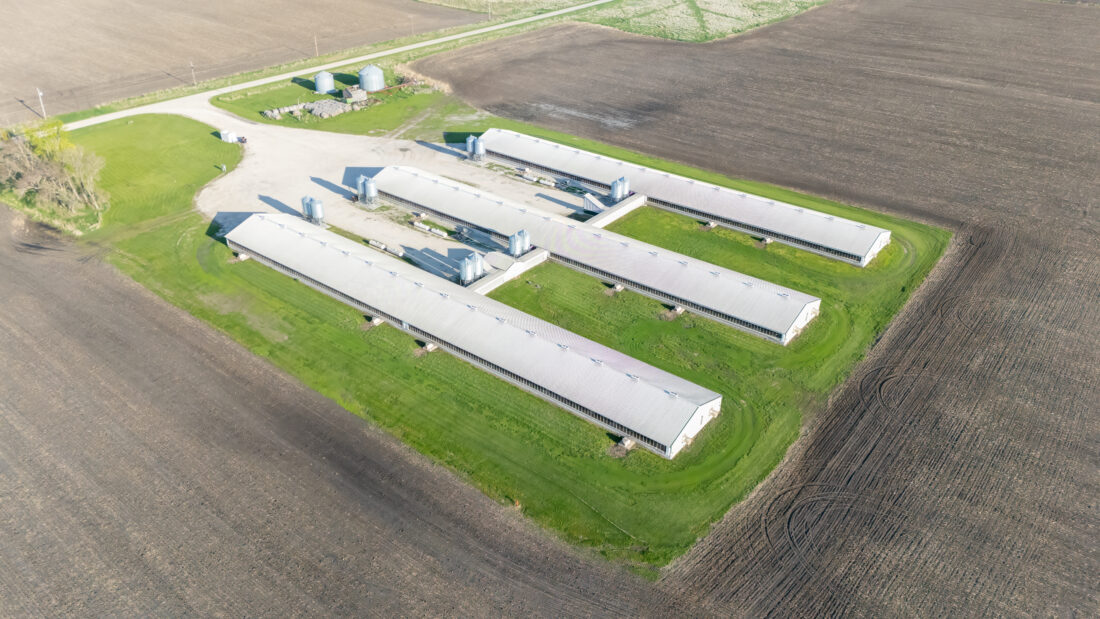
Submitted Photo After recent changes in state law, North Dakota has become more attractive to larger agriculture firms wanting to develop Concentrated Animal Feeding Operations, or CAFOs. Photo from Adobe Stock.
Some North Dakota communities are becoming more familiar with the rush to consider farms linked to industrial agriculture. Residents assisting with pushback describe the possibility of towns no longer looking the same if projects go through. North Dakota currently has nearly 100 licensed Concentrated Animal Feeding Operations, where large herds of livestock are raised in confinement.
That number is well below area states, and North Dakota leaders want more livestock production. CAFOs have a history with documented air and water pollution.
Madeline Luke, agriculture committee volunteer, Dakota Resource Council, worries the industry will eventually come knocking on her community’s doorstep, impacting her surroundings.
“You go outside, the geese are flying. The air is crisp. It’s clean,” she said. “This is the North Dakota that I have come to really value, and I would be sad to see that go, I think.”
Luke volunteers with Dakota Resource Council to review CAFO permits as proposals surface elsewhere in the state. She said local organizing is often overmatched but raising enough questions for a specific project can lead to protections. Industry leaders often tout improved animal waste management and technology to limit runoff, but skeptics say making use of responsible approaches is uneven.
Luke contends she reviewed a recent permit application for a smaller CAFO seeking expansion, arguing it shouldn’t have been approved due to water standard violations, and worries about similar outcomes for even bigger farms
Marty Haroldson, director, Division of Water Quality, North Dakota Department of Environmental Quality, said his team does thorough follow-ups on complaints and works closely with applicants regarding red flags.
“I’d say that our producers do a wonderful job of complying with their permit,” he said. “There are times when things are found, and then that is when we take action to work with that facility to return any facility back to compliance.”
Local opponents often point to water quality issues in Iowa amid a major expansion of CAFOs there. Luke said she doesn’t feel reassured about any steps North Dakota and regional developers are taking to prevent that from happening in places like the Red River Valley.
“I think if they can put them there, they will see that they can put them pretty much anywhere they want,” she said.
Local News
‘Farm to School’ efforts in ND above average
North Dakota sits above the national average for districts participating in its Farm to School program, and ...
Bottineau man dies in two-vehicle crash
GARRISON – An 88-year-old Bottineau man died in a two-vehicle crash near Garrison Friday, Nov. 28. According to ...
NAHL: Tauros defense continues to struggle in weekend sweep by Shamrocks
It was a nightmare end to the month of November for the Minot Minotauros. A four-game winning streak had the ...

Additional arrests made in NE Minot homicide
Combat survival training keeps airmen ready